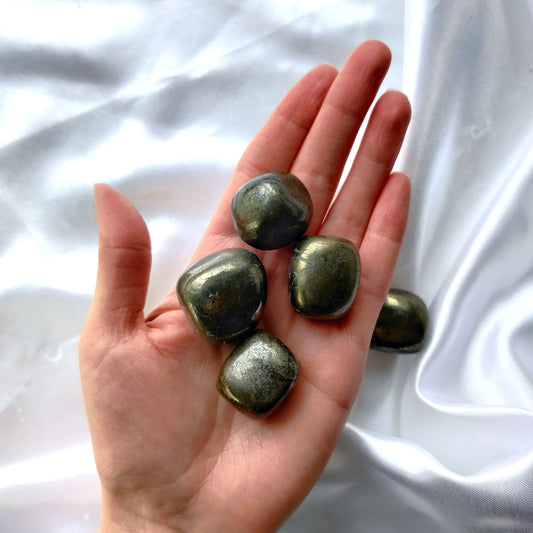
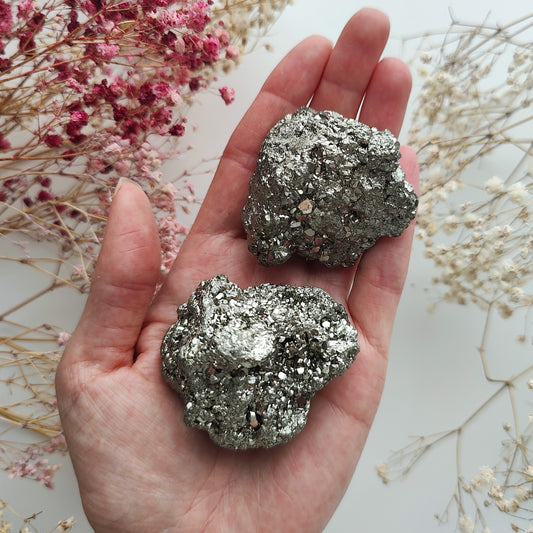
Piryt o charakterystycznym metalicznym połysku
Piryt to minerał siarczku żelaza o wzorze chemicznym FeS₂. Jego refleksyjna, mosiężnożółta powierzchnia i geometryczne formy przyniosły mu dobrze znany przydomek złoto głupców.
Podobieństwo jest jednak tylko powierzchowne. Złoto jest stosunkowo plastyczne, podczas gdy piryt jest kruchy i może tworzyć ostrokrawędziste sześciany, pirytoedry, skupiska oraz drobne powierzchnie krystaliczne. Te formy sprawiają, że piryt jest interesującym minerałem nawet bez odwoływania się do jego tradycyjnej symboliki.
Co tradycyjnie symbolizuje piryt?
We współczesnych tradycjach kryształowych piryt jest kojarzony z pewnością siebie, ambicją, celowym działaniem i nastawieniem na dostrzeganie możliwości. Niektórzy trzymają go w pobliżu planera, komputera lub miejsca pracy jako przypomnienie, aby przekładać szerokie cele na konkretne kolejne kroki.
Tradycyjne znaczenia pirytu obejmują między innymi:
- wiarę we własne możliwości
- zaangażowanie w wybrany cel
- motywację i celowe działanie
- dostrzeganie dostępnych możliwości
- utrzymywanie praktycznych granic
- budowanie postępu poprzez konsekwentną pracę
Znaczenia te mają charakter symboliczny i nie są naukowo potwierdzonym działaniem minerału. Piryt nie może zapewnić sukcesu finansowego ani zrealizować celów za Ciebie. Może natomiast reprezentować nastawienie i nawyki, które chcesz świadomie rozwijać.
Dlaczego piryt nazywany jest złotem głupców?
Piryt otrzymał swój słynny przydomek, ponieważ jego metaliczny połysk i jasny mosiężny kolor mogą przypominać złoto. Nazwa minerału pochodzi od greckiego słowa związanego z ogniem i odnosi się do iskier, które piryt może wytworzyć po uderzeniu o odpowiednio twardy materiał.
Piryt i złoto różnią się pod kilkoma względami:
- piryt często tworzy sześciany i inne geometryczne kryształy
- piryt jest kruchy, a nie plastyczny
- piryt ma mosiężnożółty kolor zamiast głębszego złotego odcienia
- piryt pozostawia ciemnozielonoczarną lub brązowoczarną rysę
- złoto można wyginać lub spłaszczać, natomiast piryt łatwiej się wyszczerbia lub pęka
Piryt jest wartościowym okazem mineralnym samym w sobie i nie powinien być traktowany jedynie jako imitacja złota.
Piryt na biurku lub w miejscu pracy
Stabilna półka lub biurko to jedne z najbardziej praktycznych miejsc do eksponowania pirytu. Jego metaliczna powierzchnia odbija światło, a sześcienne i skupiskowe formy dodają miejscu pracy ciekawej tekstury.
Możesz nadać kryształowi konkretną symboliczną rolę, ustawiając go:
- obok planera używanego do ustalania tygodniowych priorytetów
- w pobliżu notesu z celami zawodowymi lub naukowymi
- na biurku jako przypomnienie, aby kończyć jedno zadanie przed rozpoczęciem kolejnego
- obok planu oszczędnościowego lub harmonogramu projektu
- na półce, gdzie można bezpiecznie oglądać jego strukturę krystaliczną
Trzymaj okaz z dala od napojów, nawilżaczy powietrza i miejsc często dotykanych. Piryt powinien pozostawać suchy, aby jego powierzchnia zachowała dobry stan.
Piryt dla kolekcjonerów
Piryt jest popularny wśród kolekcjonerów minerałów, ponieważ tworzy kilka łatwo rozpoznawalnych form krystalicznych. Niektóre okazy pokazują wyraźnie zarysowane sześciany, inne zawierają zrośnięte kryształy, nieregularne skupiska lub drobne, połyskujące powierzchnie.
Wybierając okaz, porównaj:
- kształt i wyrazistość kryształów
- formy sześcienne, skupiskowe lub nieregularne
- jasne metaliczne lub ciemniejsze, spatynowane powierzchnie
- rozmiar i wagę egzemplarza
- obecność skały otaczającej lub innych minerałów
- stabilność okazu po ustawieniu
Niewielkie różnice, nierówne krawędzie i fragmenty skały otaczającej są naturalne w okazach mineralnych. Przed wyborem dokładnie obejrzyj zdjęcia konkretnego egzemplarza i sprawdź jego wymiary.
Piryt i inne kryształy związane z celami
Piryt można symbolicznie lub wizualnie łączyć z innymi kryształami tradycyjnie kojarzonymi z motywacją, pewnością siebie i celowym działaniem.
Cytryn jest kojarzony z optymizmem i nastawieniem na dostrzeganie możliwości. Karneol symbolizuje odwagę i aktywne działanie, natomiast tygrysie oko tradycyjnie łączy się z koncentracją i przemyślanym podejmowaniem decyzji.
Malachit jest często wybierany jako symbol zmiany, awenturyn nowych możliwości, a kamień słoneczny pewności siebie i optymizmu.
Możesz również przejrzeć kryształy związane z sukcesem lub kryształy związane z pewnością siebie.
Komu może spodobać się piryt?
Piryt może być dobrym wyborem dla osoby, która lubi metaliczne minerały, geometryczne formacje lub przedmioty o osobistym znaczeniu do miejsca pracy. Pasuje również do kolekcjonerów szukających łatwo rozpoznawalnego minerału, który wyraźnie różni się od kolorowych okazów kwarcu i kalcytu.
Piryt może spodobać się osobie szukającej:
- wyrazistego minerału na biurko
- tradycyjnego symbolu pewności siebie lub ambicji
- wprowadzenia do geometrycznych form kryształów
- niewielkiego prezentu z okazji nowej pracy lub projektu
- metalicznego kontrastu w kolorowej kolekcji kryształów
Ponieważ niektóre okazy mogą mieć ostre lub kruche krawędzie, z pirytem należy obchodzić się ostrożnie i trzymać go z dala od małych dzieci oraz zwierząt.
Jak wybrać piryt?
Wybierz piryt według miejsca, w którym chcesz go ustawić, oraz rodzaju formacji, który najbardziej Cię interesuje.
- wybierz wyraźnie uformowane sześciany, jeśli lubisz geometryczny wygląd
- wybierz skupisko, jeśli wolisz bardziej teksturowaną powierzchnię
- wybierz kompaktowy egzemplarz na mniejsze biurko lub półkę
- wybierz większy okaz jako centralny punkt kolekcji minerałów
- sprawdź wymiary i wagę przed zamówieniem
- wybierz stabilną formę, jeśli kryształ ma stać bez podstawki
Najbardziej błyszczący egzemplarz nie zawsze będzie najlepszym wyborem. Kształt kryształów, tekstura, obecność skały otaczającej i ogólne proporcje mogą być równie ważne.
Jak pielęgnować piryt?
Piryt powinien pozostawać suchy. Długotrwały kontakt z wodą i wilgotnym środowiskiem może powodować utlenianie powierzchni siarczku żelaza, prowadząc do matowienia, kruszenia się lub powstawania kwaśnych osadów.
Aby chronić piryt:
- nie mocz go ani nie płucz w wodzie
- usuwaj kurz czystym, suchym i bardzo delikatnym pędzelkiem
- przechowuj go w suchym, dobrze wentylowanym miejscu
- trzymaj go z dala od łazienek, nawilżaczy powietrza i otwartych okien
- unikaj soli, olejów, sprayów czyszczących i chemii domowej
- chroń kruche kryształy przed uderzeniami i upadkami
- nie używaj pirytu do przygotowywania wody kryształowej ani eliksirów
Jeśli na okazie pojawią się pyliste obszary, nietypowe przebarwienia lub siarkowy zapach, oddziel go od innych minerałów i przenieś do bardziej suchego miejsca przechowywania.
Dowiedz się więcej o pirycie
Znajdź swój piryt i wybierz charakterystyczny metaliczny okaz do miejsca pracy lub kolekcji.
← Wróć do wszystkich kategorii


 Wyprzedane