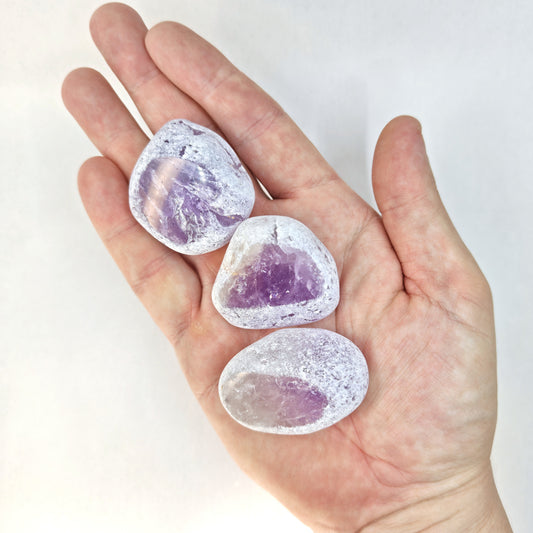
Jak wybrać ametyst i korzystać z niego na co dzień?
Ametyst występuje w wielu formach – od niewielkich kamieni polerowanych i biżuterii po surowe okazy, skupiska i większe formy dekoracyjne. Najlepszy wybór zależy przede wszystkim od tego, gdzie chcesz trzymać kamień i w jaki sposób ma towarzyszyć Ci na co dzień.
Jego barwa może przechodzić od jasnej lawendy po głęboki fiolet. Niektóre okazy mają równomierny kolor, inne wyraźne strefy barwne, naturalne inkluzje lub widoczne zakończenia kryształów. Dzięki tym różnicom każdy ametyst wygląda nieco inaczej.
Jaka forma ametystu będzie odpowiednia?
Surowy okaz lub skupisko ametystu dobrze sprawdzi się na półce, biurku albo stoliku nocnym. Naturalne zakończenia kryształów odbijają światło, a fioletowa barwa może stać się wyrazistym elementem wnętrza.
Mniejszy ametyst polerowany to praktyczny wybór, jeśli chcesz mieć kamień przy sobie. Bez problemu zmieści się w kieszeni, woreczku lub torbie, a w domu możesz odłożyć go w wybrane miejsce.
Biżuteria z ametystem sprawdzi się, jeśli chcesz regularnie nosić ten minerał. Bransoletki, zawieszki i kolczyki pozwalają wprowadzić charakterystyczny fiolet ametystu do codziennych stylizacji.
Jeśli wolisz rozpocząć od połączenia kilku minerałów, zobacz nasze zestawy kryształów.
Gdzie ustawić ametyst w domu?
Ametyst chętnie wybierany jest do miejsc przeznaczonych na odpoczynek, koncentrację lub spokojną chwilę po intensywnym dniu. Małe skupisko może dodać koloru półce lub biurku, a większy okaz stać się dekoracyjnym punktem wnętrza.
Popularne miejsca na ametyst to:
- stolik nocny lub półka w sypialni
- biurko i domowe miejsce pracy
- kącik do czytania, medytacji lub odpoczynku
- półka lub witryna w salonie
- miejsce związane z wieczorną rutyną
Więcej inspiracji znajdziesz w naszym poradniku o korzystaniu z ametystu na co dzień.
Ametyst i wieczorne wyciszenie
W tradycjach związanych z kryształami ametyst kojarzony jest ze spokojem, wyciszeniem i refleksją. Z tego powodu wiele osób wybiera go do sypialni lub przestrzeni związanej z wieczornym odpoczynkiem.
Możesz ustawić ametyst obok łóżka, potrzymać niewielki kamień podczas spokojnej chwili albo potraktować go jako wizualne przypomnienie o zwolnieniu tempa. Kryształy nie zastępują zdrowych nawyków związanych ze snem ani profesjonalnej opieki zdrowotnej. Więcej przeczytasz o amecieście, śnie i wieczornym wyciszeniu. Możesz również zobaczyć nasze kryształy kojarzone ze snem i odpoczynkiem.
Z czym łączyć ametyst?
Ametyst dobrze wygląda samodzielnie, ale jego fioletowa kolorystyka i tradycyjna symbolika naturalnie komponują się również z kilkoma innymi minerałami.
Kwarc różowy tworzy delikatne zestawienie różu i fioletu. Kryształ górski dodaje jasnego, przejrzystego kontrastu, natomiast lepidolit uzupełnia ametyst liliowymi i fioletowymi tonami.
Jeśli tworzysz zestaw związany z odpoczynkiem i wymagającymi dniami, zobacz także nasze kryształy na stresujące chwile. Jeśli bliższa jest Ci symbolika ochrony i ugruntowania, przejrzyj również kryształy tradycyjnie kojarzone z ochroną.
Czy ametyst jest dobry dla początkujących?
Tak. Ametyst jest łatwo rozpoznawalny, występuje w wielu formach i może być dobrym wyborem na pierwszy kryształ. Możesz zacząć od niewielkiego kamienia polerowanego, biżuterii albo dekoracyjnego skupiska.
Nie potrzebujesz specjalnego rytuału ani wcześniejszej wiedzy. Przy wyborze możesz kierować się kolorem, formą, planowanym miejscem albo tym, jakie osobiste znaczenie ma dla Ciebie tradycyjna symbolika ametystu.
Jeśli dopiero poznajesz minerały, przeczytaj nasz poradnik o kryształach dla początkujących.
Ametyst na prezent
Ametyst jest uniwersalnym pomysłem na prezent ze względu na charakterystyczną fioletową barwę, dużą różnorodność form i powszechnie rozpoznawalną symbolikę.
Niewielki kamień polerowany sprawdzi się jako drobny upominek, biżuteria jako prezent do noszenia na co dzień, a skupisko lub surowy okaz jako dekoracyjny element wnętrza.
Przy wyborze zastanów się, czy dana osoba woli coś dekoracyjnego, praktycznego czy łatwego do zabrania ze sobą. Więcej inspiracji znajdziesz w naszym poradniku o kryształach na prezent.
Kolor i pochodzenie ametystu
Ametyst jest fioletową odmianą kwarcu. Jego barwa związana jest ze śladowymi ilościami żelaza oraz naturalnym napromieniowaniem podczas powstawania kryształu. Kolor może być jasnolawendowy, intensywnie fioletowy albo obejmować kilka odcieni w jednym okazie.
Do znanych źródeł ametystu należą między innymi Brazylia, Urugwaj, Madagaskar i Zambia. Odcień, przejrzystość, wielkość kryształów i sposób ich wykształcenia mogą różnić się zarówno między lokalizacjami, jak i między pojedynczymi okazami.
Ametyst możesz również porównać z lepidolitem i innymi minerałami o podobnej kolorystyce w naszym poradniku o fioletowych kryształach.
Dowiedz się więcej o ametyście
Odkryj kolekcję ametystu → i znajdź kolor, kształt oraz formę, które najbardziej Ci odpowiadają.