How to choose a selenite crystal
Selenite pieces range from transparent crystal blades to white, fibrous forms with a luminous surface. Most towers, bowls, wands and polished shapes sold as selenite display a moving band of reflected light.
When choosing a piece, consider where you intend to display it and how frequently it will be handled. Selenite is an exceptionally delicate mineral, making a stable and dry display location more suitable than a pocket or handbag.
What gives selenite its luminous appearance?
Selenite is a crystalline variety of gypsum, a mineral composed of hydrated calcium sulphate. True selenite may form transparent sheets, blades and clear crystals.
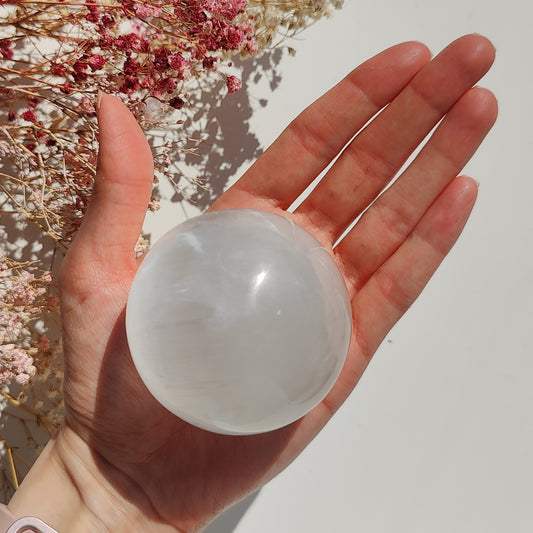
Many white products commercially described as selenite are more precisely classified as satin spar. Satin spar is also gypsum, but its parallel fibrous structure creates the characteristic silky band of light visible across polished towers, bowls, spheres and wands.
Both names are widely encountered when shopping for crystals. The materials share the same composition and require the same careful protection from water, scratches and impacts.
Selenite or satin spar?
The distinction between selenite and satin spar is based on crystal structure and appearance:
- true selenite is commonly clear or transparent and may form sheets or blade-like crystals
- satin spar is fibrous, white or translucent and displays a silky moving reflection
- both are varieties of the mineral gypsum
- both have a Mohs hardness of approximately 2
- both should be kept dry and handled carefully
The familiar white towers, bowls, hearts and wands found in crystal shops are usually satin spar gypsum, although “selenite” remains the established retail name.
Towers, bowls, wands or polished shapes?
Selenite towers introduce height and reflected light to a shelf, desk or crystal display. Their vertical shape works especially well beside smaller polished stones and rounded pieces.
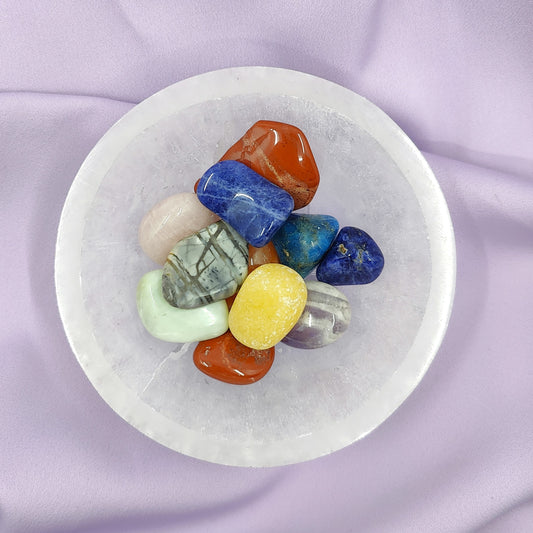
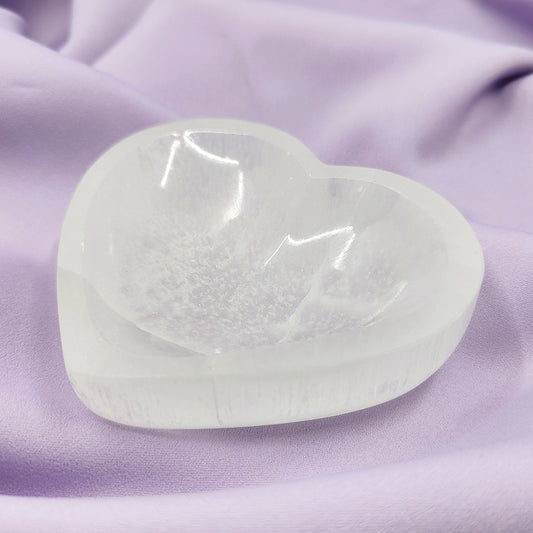
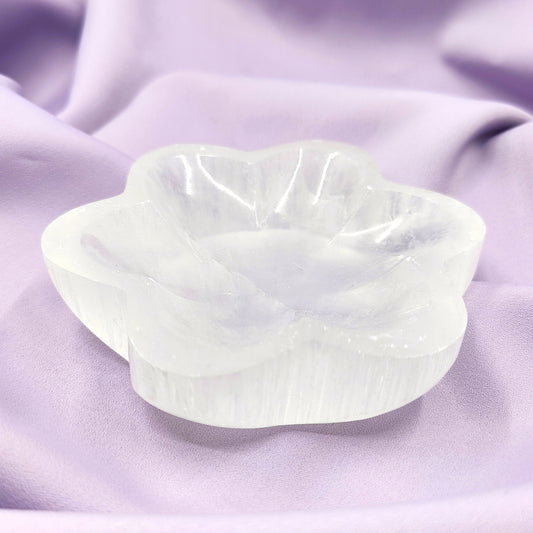
Selenite bowls and plates provide an attractive place for displaying a small number of lightweight crystals. Harder stones should be lifted rather than dragged across the surface because they can easily scratch the gypsum.
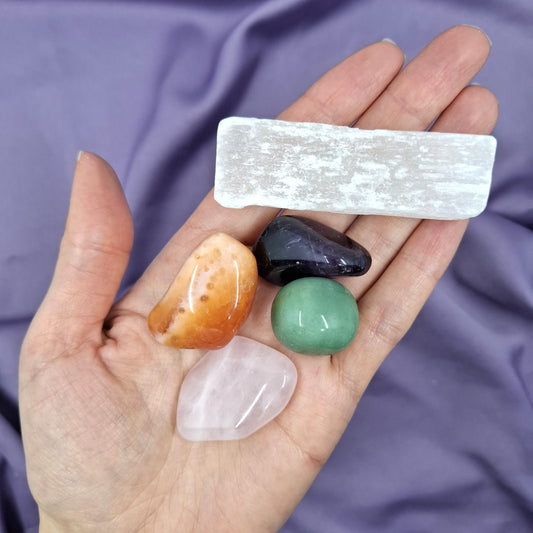
Wands reveal the fibrous structure particularly well. They can be displayed beside a journal, in a meditation area or with other crystals traditionally associated with clarity.
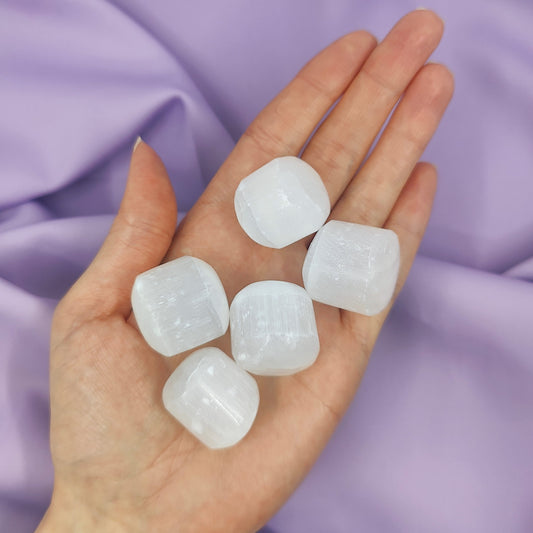
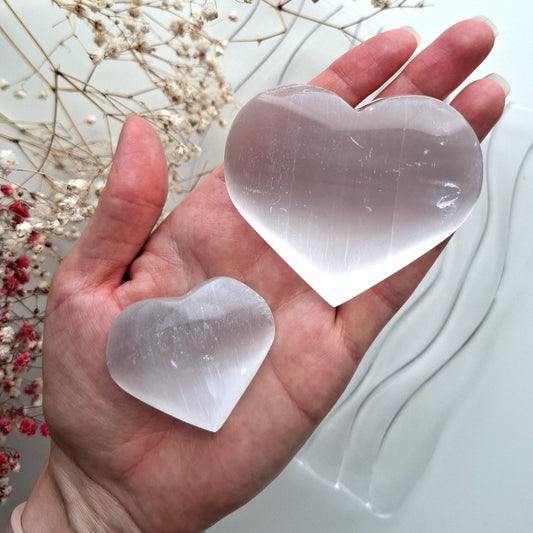
Spheres, hearts and other carved shapes highlight the material’s silky reflections from different directions. Turn a piece in the light before choosing it to see how the reflective band moves across its surface.
When choosing your selenite, consider:
- whether you prefer a tower, bowl, wand or carved shape
- how much translucency the piece displays
- where it can be kept safely and permanently
- whether the size suits the intended shelf or display
- how the reflected bands appear from different angles
The traditional meaning of selenite
In crystal traditions, selenite is associated with cleansing, clarity, renewal and a peaceful atmosphere. It is often selected as a symbolic reminder to simplify a space, release distractions and approach a quiet moment with greater attention.
Some people place selenite beside other crystals as part of a symbolic cleansing routine. Others choose it for meditation, journalling or simply because its pale colour and luminous surface complement a calm interior.
These meanings come from spiritual traditions and personal practices rather than scientifically demonstrated effects. Learn more in our guide to the meaning of selenite.
Can selenite cleanse other crystals?
Selenite is one of the best-known crystals traditionally used for symbolic crystal cleansing. Smaller stones may be placed beside a tower or carefully arranged in a selenite bowl as part of a personal routine.
There is no scientific evidence that one mineral can remove energy from another. The practice can instead provide a dedicated moment to inspect, organise and reconnect with a crystal collection.
When using a selenite bowl or plate:
- Make sure every crystal is completely dry.
- Add only a few lightweight stones.
- Place the bowl on a stable surface.
- Lift the stones when removing them.
- Avoid sliding or dropping harder minerals onto the selenite.
Do not overfill the bowl, as heavy and harder crystals may scratch, chip or crack its surface.
Selenite for meditation and quiet routines
Selenite’s pale colour and simple appearance make it a popular addition to uncluttered meditation and reflection spaces.
A tower or wand can be placed nearby as a visual focus. It may also sit beside a notebook as a reminder to pause, organise your thoughts and decide on one practical next step.
No complicated ritual is required. The crystal can simply mark the beginning of a quiet routine, breathing exercise or journalling session.
Selenite at home
Selenite works particularly well in areas where it can remain dry, stable and protected from frequent handling. Its white and translucent appearance combines easily with both colourful crystal displays and neutral interiors.
Popular places for selenite include:
- a bedroom shelf
- a meditation or journalling area
- a desk away from drinks
- a living-room display
- a cabinet containing other minerals
- a dry entrance table protected from wet clothing
Avoid bathrooms, kitchens, windows exposed to condensation and other humid locations.
Selenite as a gift
A selenite tower, heart or decorative piece can make a thoughtful gift for someone who enjoys crystals or light, minimalist interiors.
Its traditional associations with clarity and renewal can suit a new home, fresh beginning or personal milestone. A bowl may be especially useful for someone who already owns several smaller stones, while a tower or sphere works well as a standalone decorative gift.
Include basic care instructions so the recipient knows that selenite must be kept dry and handled more carefully than quartz.
Crystals that pair well with selenite
Selenite combines well with crystals traditionally associated with calm, clarity and reflection.
Amethyst adds purple colour and is symbolically connected with peaceful routines. Clear quartz creates a bright, neutral arrangement traditionally associated with clarity and focused intentions.
Moonstone introduces a luminous appearance and symbolism connected with intuition. Rose quartz adds pale pink colour, while howlite continues the white colour palette with contrasting grey markings.
For several complementary stones selected around a shared purpose, explore the crystal sets.
Is selenite suitable for beginners?
Selenite can be a visually striking first crystal, particularly for someone interested in home displays, meditation spaces or different mineral textures.
Its delicacy should be understood before purchasing. Selenite is considerably easier to scratch than quartz and should not be carried loose with keys, coins or other stones.
A small tower or decorative piece placed permanently on a dry shelf is often more practical for a beginner than jewellery or a frequently handled pocket stone.
Read our crystals for beginners guide for more help with selecting and caring for your first crystals.
Selenite durability and care
Selenite has a Mohs hardness of approximately 2. It can be scratched with a fingernail and may chip, split or develop surface marks if dropped or handled roughly.
Keep selenite away from water and prolonged humidity. Water can damage and gradually dissolve the gypsum surface. Clean it with a dry, clean cloth or a very gentle brush rather than rinsing it.
Avoid steam, ultrasonic cleaning, chemical cleaners and abrasive cloths. Store each piece separately from harder minerals and protect delicate edges during transport.
Selenite is not recommended as a loose pocket stone or for everyday jewellery because moisture, friction and impacts can quickly damage it.
Learn more about selenite
Explore the selenite collection and choose a tower, bowl, wand or carved piece for your home or crystal display.