Så väljer du kristaller för barn på ett säkert sätt
Kristaller kan väcka barns intresse för färger, mönster, geologi och samlande. De kan också bli fina minnessaker eller dekorationer i barnrummet när en vuxen väljer ett lämpligt exemplar och bestämmer var det kan hanteras eller visas på ett säkert sätt.
Kristaller är inte leksaker om inte den enskilda produkten uttryckligen har utformats, testats och märkts som en sådan. Produktens storlek, mineralets sammansättning och barnets ålder ska alltid vägas in före köp.
Vad kan en kristall betyda för ett barn?
Ett barn kan välja en kristall för dess färg, form eller intressanta mineraliska detaljer. En vuxen kan också ge stenen en symbolisk koppling till en personlig egenskap, som vänlighet, nyfikenhet eller uthållighet.
Värdet ligger i berättelsen och den gemensamma aktiviteten – inte i någon garanterad effekt från kristallen.
Till exempel:
- ametist kan symbolisera tid för en lugn kvällsrutin
- rosenkvarts kan påminna om vänlighet mot familj och vänner
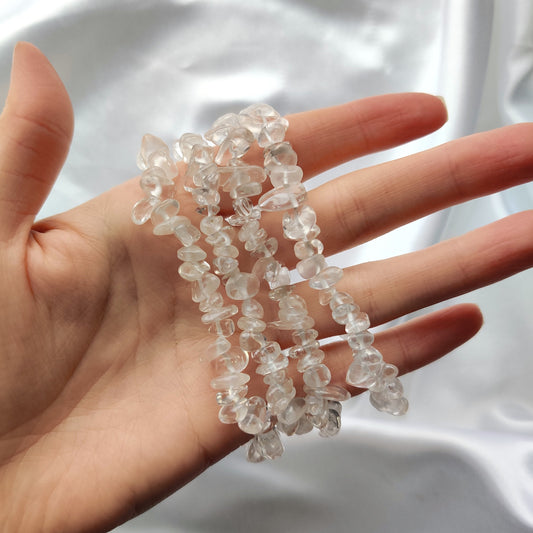
- bergkristall kan introducera barnet till transparens och kristallbildning
- blå bandagat kan symbolisera att turas om och lyssna i samtal
- ett mönstrat mineral kan väcka frågor om geologi
- ett valt exemplar kan bli ett minne från en födelsedag eller annan milstolpe
Kristaller gör inte barn lugnare, säkrare eller friskare. De ska aldrig ersätta känslomässigt stöd, tydliga rutiner eller professionell vård.
Viktiga säkerhetsråd
Små kristaller kan innebära kvävningsrisk. Håll dem borta från spädbarn, småbarn och barn som kan stoppa föremål i munnen.
Tänk alltid på:
- barnets ålder och utvecklingsnivå
- kristallens storlek och vikt
- vassa spetsar och grova kanter
- sprickor som kan göra att delar bryts loss
- om mineralet kan avge damm eller fibrer
- säkerheten hos smyckeskedjor och elastiska band
- var kristallen ska förvaras
En vuxen behöver alltid ha uppsikt när ett barn hanterar ett litet, spetsigt, skört eller okänt mineral.
Var ska kristaller placeras i barnets rum?
Placera kristaller på en stabil hylla där de inte kan falla ner på barnet. Tunga exemplar bör stå tillräckligt lågt för att vara stabila, men samtidigt helt utom räckhåll för små barn.
Placera inte kristaller:
- i en spjälsäng eller ett litet barns säng
- under en kudde
- på ett instabilt nattduksbord
- ovanför en säng där de kan falla ner
- bredvid mat eller dricksvatten
- där ett spädbarn eller småbarn kan nå dem
- direkt intill områden för aktiv lek
Ett stängt vitrinskåp kan vara ett praktiskt alternativ för en mineralsamling.
Kristaller ska inte ligga under barnets kudde
Även rundade stenar kan bli obekväma eller orsaka skada om barnet rullar över dem. Små stenar kan dessutom försvinna i sängkläder och innebära kvävningsrisk.
Om en kristall hör ihop med kvällsrutinen bör den stå på en stabil hylla utom barnets räckhåll. Rollen kan vara helt visuell: stenen kan påminna familjen om att det är dags att börja den vanliga kvällsrutinen.
Det är själva rutinen – regelbundna tider, en lämplig sovmiljö och trygghet från en vuxen – som hjälper barnet vid läggdags.
Gör aldrig kristallvatten åt ett barn
Lägg inte kristaller i dricksvatten och låt inte barnet slicka, suga på eller tugga på dem. Mineraler kan innehålla ämnen eller ytbehandlingar som inte är avsedda att förtäras.
Det gäller även kristaller som på nätet beskrivs som säkra eller ”renande”. Det går inte att hemma identifiera alla inneslutningar, beläggningar, färgämnen eller föroreningar på ett tillförlitligt sätt.
Om ett barn stoppar ett mineral i munnen eller sväljer en del av det, kontakta relevant sjukvård eller giftinformationscentral.
Kristaller och smycken för barn
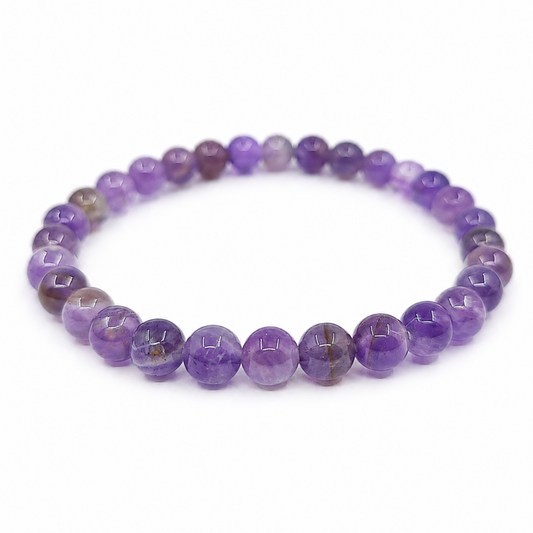
Armband, halsband och hängen kan innebära risk för kvävning, strypning eller att smycket fastnar. De ska inte bäras under sömn, sport, aktiv lek eller utan lämplig uppsikt.
Innan du ger kristallsmycken till ett barn:
- kontrollera rekommenderad ålder
- granska snöre, lås och resår
- kontrollera metalldelarnas material
- ta hänsyn till möjliga materialkänsligheter
- ta av smycken före sömn
- ta av dem före bad och fysisk aktivitet
- kontrollera regelbundet om pärlor eller fästen har blivit lösa eller skadade
Om barnet är för litet för att använda smycken säkert är ett dekorativt exemplar som förblir under vuxens kontroll ett bättre val.
Välkända kristaller för barn
Tåligare kvartsvarianter är ofta enklare att ta hand om än mycket ömtåliga mineraler, men alla kristaller kan få flisor eller gå sönder om de tappas.
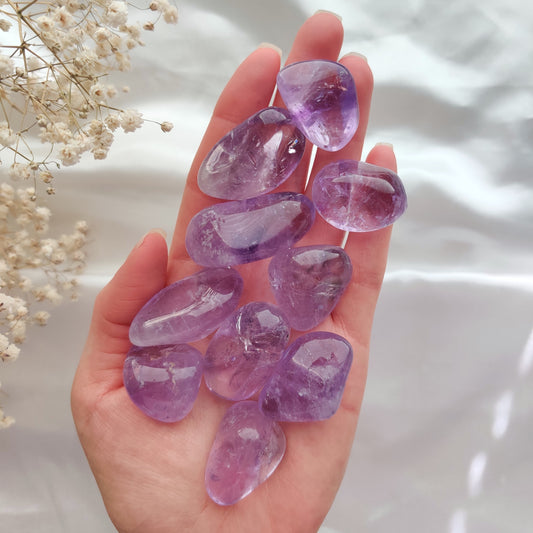
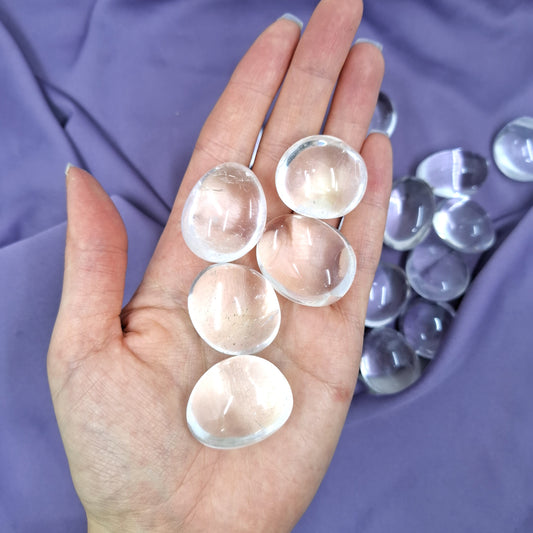
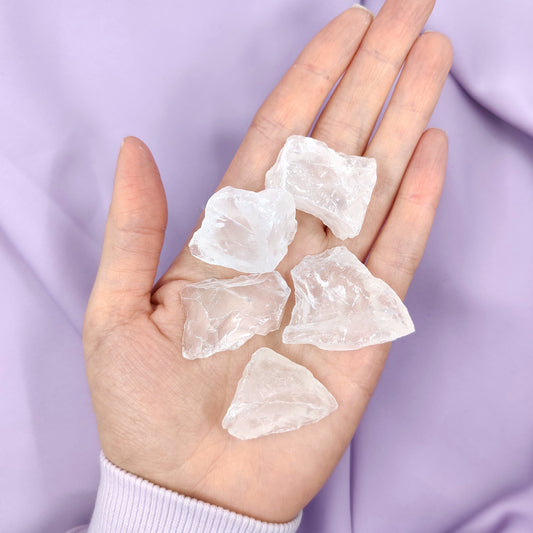
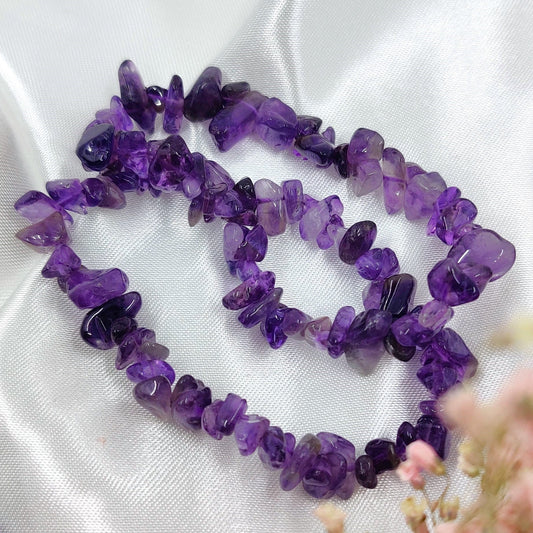
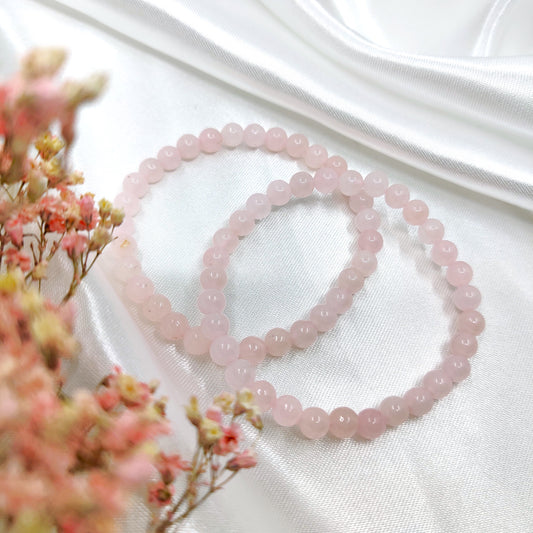
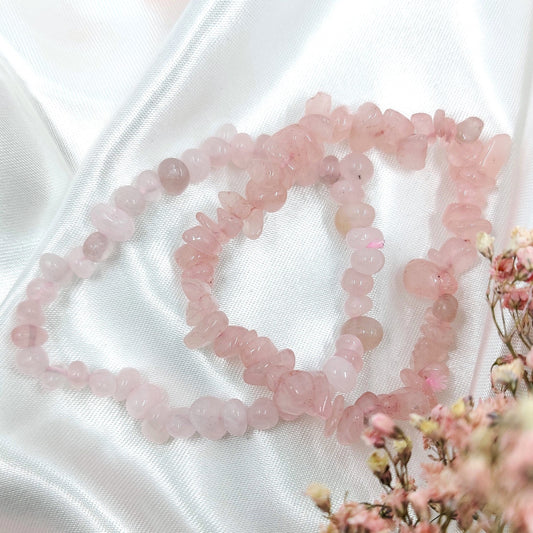
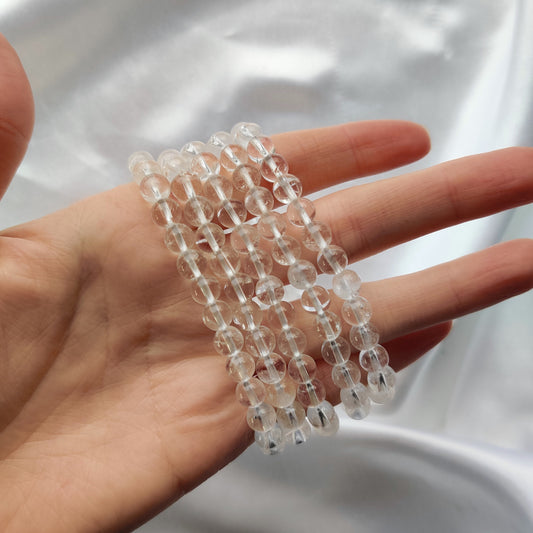
Ametist visar violetta färger och tydliga kvartsegenskaper. Rosenkvarts har ljusrosa toner, medan bergkristall ger möjlighet att studera transparens, inneslutningar och kristallform.
Blå bandagat känns igen på sina ljusblå och vita band. Välj ett tillräckligt stort och stabilt exemplar och anpassa uppsikten efter barnets ålder.
Traditionell symbolik gör inte ett mineral säkrare än ett annat. Det är de fysiska egenskaperna och produktens utformning som avgör hur den kan användas säkert.
Mineraler som kräver extra försiktighet
Vissa mineraler är sköra, innehåller potentiellt skadliga ämnen eller kan bilda farligt damm när de bryts, skärs eller slipas.
Exempel som kräver särskild försiktighet är:
- fibrösa mineraler
- cinnober och andra kvicksilverhaltiga mineraler
- galenit och andra blyhaltiga mineraler
- arsenikhaltiga mineraler
- smuliga eller oxiderande sulfidmineraler
- vassa kluster och kristallspetsar
- oidentifierade råa mineralbitar
Barn ska aldrig skära, borra, slipa eller bearbeta dekorativa mineraler. Håll alltid mineralstoft borta från barn.
Så väljer du ett lämpligt exemplar
När barnet är gammalt nog att förstå hur stenen ska hanteras kan ni välja den tillsammans. Färg och utseende kan göra valet personligt utan att lova någon särskild effekt.
Leta efter:
- ett exemplar som är för stort för att sväljas
- en stabil form som inte rullar lätt
- rundade snarare än vassa kanter
- en yta som inte smular eller avger damm
- tydlig produktinformation
- ett mineral med enkla skötselkrav
- en bestämd och säker plats för förvaring eller visning
Utgå inte från att en polerad yta automatiskt gör alla mineraler lämpliga för barn.
Kristaller som pedagogiska föremål
En kristall kan bli utgångspunkt för lärande i stället för att presenteras enbart genom andliga påståenden.
Ni kan utforska:
- mineralets namn och sammansättning
- var och hur det bildas
- färg och mönster
- skillnaden mellan bergarter och mineraler
- hårdhet och säker hantering
- skillnaden mellan polerade och råa ytor
- varför två exemplar av samma mineral kan se olika ut
Vår A–Ö-guide till kristaller innehåller information om olika mineraler och deras traditionella symbolik.
När ett barn är oroligt eller har svårt att sova
En kristall är inte en behandling för oro, rädsla, sömnproblem eller andra hälsobesvär. Undvik att säga till ett barn att det behöver en kristall för att vara tryggt eller att något dåligt kan hända utan den.
Om oro, stress eller sömnsvårigheter är långvariga eller påverkar vardagen bör du kontakta lämplig vårdpersonal. Kristallen kan fortfarande vara en dekorativ minnessak, men ska inte bära ansvaret för barnets välbefinnande.
Så tar du hand om barnets kristall
Skötseln beror på mineralet. En vuxen bör ansvara för rengöringen om mineralets sammansättning eller behandling är osäker.
Allmänna försiktighetsåtgärder:
- torka tåliga exemplar med en ren trasa
- undvik starka kemikalier och slipande produkter
- blötlägg inte oidentifierade mineraler
- kontrollera regelbundet om det finns sprickor eller lösa fragment
- ta bort skadade exemplar från barnets räckhåll
- tvätta händerna efter hantering av dammiga råa mineraler
- förvara varje exemplar säkert när det inte används
Följ alltid de specifika skötselråden för det aktuella mineralet och produkten.
Läs mer om välkända kristaller
Upptäck kristaller för barn → och välj en åldersanpassad minnessak eller rumsdekoration med säker placering i fokus.
← Tillbaka till alla kategorier


 Slutsåld
 Kommer snart