Så väljer du honungskalcit
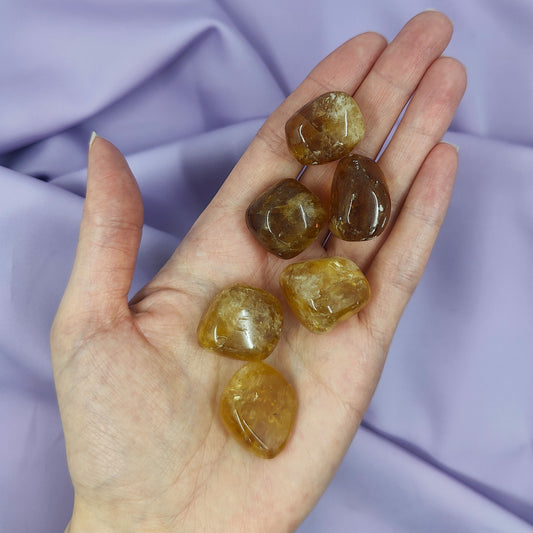
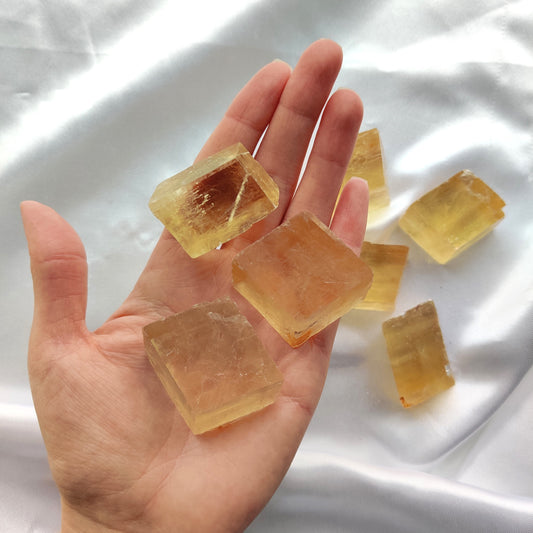
Honungskalcit kan variera från ljust gyllengult till djupare toner av bärnsten, karamell och brunaktiga nyanser. Vissa exemplar är relativt klara och genomskinliga, medan andra innehåller molniga lager, färgzoner eller tydliga inre linjer.
Vilket exemplar som passar bäst beror på hur du vill placera eller använda det. Rå honungskalcit visar mer av mineralets ursprungliga textur, medan polering framhäver färgen och de genomskinliga detaljerna.
Hur ser honungskalcit ut?
Honungskalcit är en gyllene eller bärnstensfärgad variant av kalcit. Namnet beskriver färgen och inte en separat mineralart.
Utseendet kan omfatta:
- ljusgula och varmt gyllene partier
- djupare honungs- och karamelltoner
- genomskinliga kanter
- molniga partier och färgband
- plana inre ytor som bildas av kalcitens spaltning
- regnbågsliknande reflektioner inuti polerade exemplar
Naturliga variationer gör att två exemplar kan skilja sig tydligt åt i både färg och transparens.
Rå honungskalcit eller ett polerat exemplar?
Rå honungskalcit visar mer av mineralets ursprungliga ytor och kantiga struktur. Den passar bra i mineralsamlingar och på skyddade hyllor där den inte behöver hanteras ofta.
Polerade stenar och dekorativa former gör den gyllene färgen tydligare. En slät yta kan också framhäva inre band, reflektioner och genomskinliga partier som syns mindre tydligt i ett rått mineralexemplar.
När du väljer honungskalcit kan du fundera på:
- om du föredrar ljust guld eller djupare bärnstenstoner
- om du vill ha en rå eller polerad yta
- hur transparent eller grumligt exemplaret ska vara
- angiven storlek och vikt
- var stenen ska stå framme
- om bilderna visar exakt den kristall du får
Eftersom kalcit är relativt ömtåligt bör du välja en stabil plats där stenen inte riskerar att stötas till eller tappas.
Honungskalcitens traditionella betydelse
I kristalltraditioner förknippas honungskalcit med självförtroende, motivation, klarhet och målmedvetet handlande. Den väljs ofta under perioder då man sätter upp mål, lär sig något nytt eller försöker hålla fokus på ett projekt.
Vissa har honungskalcit på skrivbordet som en visuell påminnelse om sina prioriteringar. Andra väljer stenen helt enkelt för att den varma gyllene färgen passar i hemmet eller kristallsamlingen.
Dessa betydelser bygger på kristalltraditioner och personliga praktiker. Läs mer i vår guide om honungskalcitens betydelse.
Honungskalcit för arbete och studier
Honungskalcitens varma färg gör den till ett fint inslag på skrivbord, i ateljéer och på studieplatser. Ett mindre polerat exemplar tar liten plats bredvid en anteckningsbok eller dator, medan en större kristall kan bli ett blickfång på en närliggande hylla.
Honungskalcit kan passa när du:
- börjar med ett nytt projekt
- skapar en särskild studieplats
- sätter upp personliga eller yrkesmässiga mål
- vill tillföra varma färger på arbetsplatsen
- bygger en samling kring självförtroende och motivation
Utforska fler kristaller för studier och fokus, kristaller för självförtroende eller kristaller för framgång.
Honungskalcit i hemmet
Honungskalcit passar naturligt tillsammans med träytor, neutrala miljöer och andra mineral i varma färger. Den kan stå för sig själv eller kombineras med gula, orange, bruna och gyllene kristaller.
Populära platser är:
- ett skrivbord eller hemmakontor
- en hylla i vardagsrummet
- en läshörna
- ett skyddat vitrinskåp med mineral
- en samling kristaller i varma färger
Håll kristallen borta från kök, badrum och andra platser där den kan komma i kontakt med fukt, syror eller rengöringsprodukter.
Honungskalcit och citrin är olika mineral
Honungskalcit och citrin kan båda ha en varm gul eller gyllene färg, men de är inte samma mineral.
Honungskalcit består av kalciumkarbonat och ligger på ungefär 3 på Mohs hårdhetsskala. Mineralet är relativt ömtåligt och reagerar med syror.
Citrin är en variant av kvarts och ligger på ungefär 7 på Mohs skala. Den är betydligt hårdare och har en annan kristallstruktur.
Färgen i sig räcker därför inte för att identifiera en gul kristall. Produktinformationen bör tydligt ange om ett exemplar är kalcit, kvarts eller ett annat mineral.
Kristaller som passar bra med honungskalcit
Honungskalcit passar fint med andra kristaller i varma färger som traditionellt förknippas med optimism, motivation och självförtroende.
Citrin fortsätter den gula och gyllene färgskalan. Solsten tillför persikofärgade och orange toner samt reflekterande detaljer.
Orange kalcit tillhör samma mineralgrupp men har en starkare orange färg. Karneol ger djupare rödorange toner och förknippas traditionellt med kreativitet och handlingskraft.
Tigeröga skapar en mörkare gyllenbrun kombination och förknippas ofta med fokus och självförtroende.
Om du vill ha flera kompletterande stenar som valts kring ett gemensamt tema kan du utforska våra kristallset.
Passar honungskalcit för nybörjare?
Honungskalcit kan vara ett intressant första val för den som tycker om varma färger och tydliga mineralstrukturer. Det gyllene utseendet är lätt att uppskatta utan någon särskild rutin eller tidigare kunskap.
Mineralet behöver hanteras varsammare än kvarts. För nybörjare är det bäst att ha stenen på en skyddad yta, undvika vatten och syror samt hantera polerade former försiktigt.
Utforska fler kristaller för nybörjare om du bygger din första samling.
Honungskalcitens tålighet och skötsel
Kalcit ligger på ungefär 3 på Mohs hårdhetsskala. Det repas lätt och har tydlig spaltning, vilket innebär att mineralet kan spricka längs plana inre ytor om det tappas eller utsätts för ett slag.
Kalcit reagerar också med syror. Vinäger, citronsaft och sura rengöringsmedel kan matta ned eller skada ytan.
För säker skötsel:
- ta bort damm med en ren, torr trasa
- undvik att blötlägga kristallen i vatten
- använd aldrig vinäger, syror eller rengöringsprodukter
- skydda stenen mot fall och hårda stötar
- förvara den separat från hårdare mineral
- undvik ultraljuds- och ångrengöring
- hantera polerade spetsar och kanter varsamt
Rengöring utan vatten är den säkraste generella metoden för honungskalcit.
Läs mer om honungskalcit
Utforska kollektionen med honungskalcit och hitta en rå kristall eller ett polerat exemplar i en gyllene nyans som tilltalar dig.