Så väljer du obsidian
Obsidian känns igen på sin glaslika yta och djupa färg. Klassisk svart obsidian kan se nästan helt ogenomskinlig ut, medan tunnare kanter ibland blir lätt genomskinliga när de hålls mot starkt ljus.
Andra varianter kan innehålla ljusa mönster, rödbruna områden eller diskreta band av reflekterande färg. Välj efter variant, ytfinish och det individuella utseende som tilltalar dig mest.
Vad är obsidian?
Obsidian är vulkaniskt glas och inte ett kristallint mineral. Det bildas när kiseldioxidrik lava kyls så snabbt att kristaller inte hinner utvecklas.
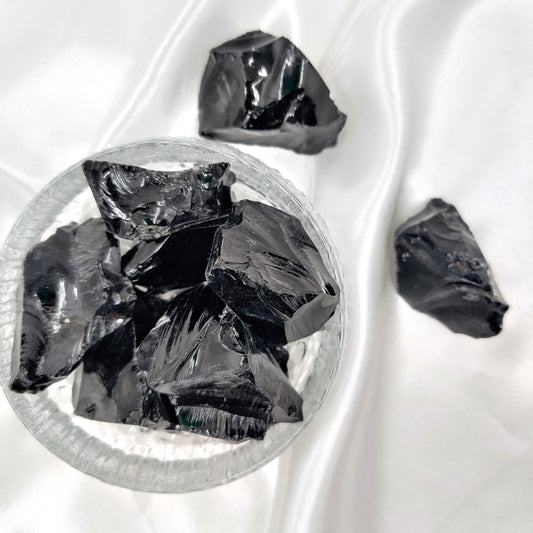
Sammansättningen och den glaslika strukturen ger obsidian en slät, reflekterande yta. När materialet bryts bildas böjda brottytor och potentiellt extremt vassa kanter.
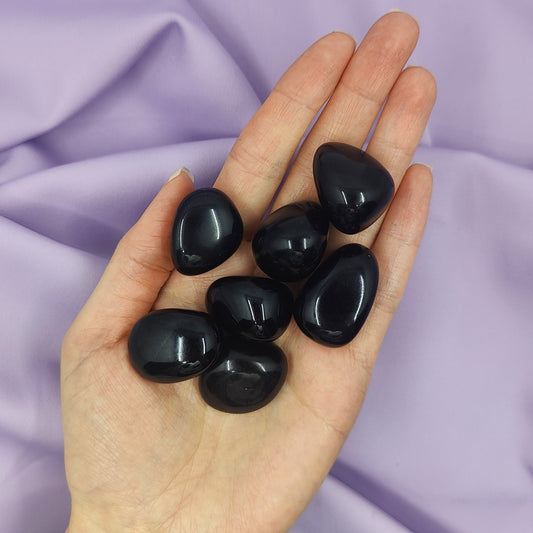
Obsidian har historiskt använts till skärverktyg, pilspetsar, dekorativa föremål och smycken. Moderna polerade exemplar behåller den mörka färgen och glansen samtidigt som de vassaste råa kanterna har avlägsnats.
Olika varianter av obsidian
Obsidian finns i flera tydligt igenkännliga varianter. De ser olika ut men har samma vulkaniska ursprung.
Svart obsidian
Svart obsidian är den klassiska och mest välkända varianten. Den har ett djupt svart, glasliknande utseende och kan bli lätt genomskinlig vid tunna kanter.
I kristalltraditioner förknippas svart obsidian med skydd, jordning och tydliga personliga gränser.
Snöflingeobsidian
Snöflingeobsidian har ljusgrå eller vita mönster mot svart bakgrund. Dessa ”snöflingor” består av kristobalitkluster som har bildats i det vulkaniska glaset.
Varje exemplar har sin egen fördelning av markeringar. Vissa har många små mönster, medan andra bara visar några få större områden.
Regnbågsobsidian
Regnbågsobsidian kan visa diskreta band i grönt, violett, guld eller andra färger under starkt riktat ljus. Effekten syns inte alltid från alla vinklar.
När du väljer regnbågsobsidian är det bra att titta på bilder tagna från flera håll och i olika belysning. Färgen är ofta mer diskret än namnet antyder.
Mahognyobsidian
Mahognyobsidian kombinerar svart med varma rödbruna eller mahognyfärgade områden. Mönstren kan framträda som fläckar, böljande linjer eller större färgfält.
Det är ett varmare alternativ till helt svart obsidian och förknippas traditionellt med jordning, självförtroende och stabilitet.
Rå obsidian, polerade stenar eller smycken?
Rå obsidian visar mer av den ursprungliga strukturen hos det vulkaniska glaset. Brottytor kan vara mycket vassa och ska aldrig hanteras som en vanlig rundad sten.
Polerad obsidian har en slät yta som framhäver färgen och den reflekterande glansen. Mindre polerade stenar kan följa med i en skyddande tygpåse, medan klot, torn och snidade former fungerar bra som dekorativa föremål.
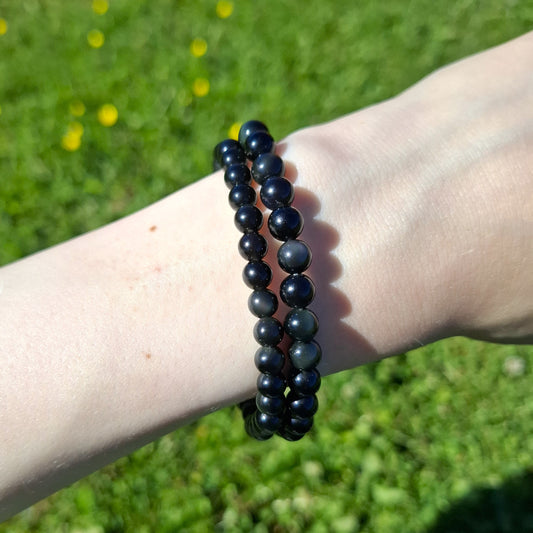
Smycken med obsidian har ett mörkt och mångsidigt uttryck. Armband, hängen och örhängen är enkla att kombinera med många färger och stilar.
När du väljer obsidian kan du fundera på:
- vilken variant och vilket mönster som tilltalar dig mest
- om du föredrar en rå eller polerad yta
- om stenen ska stå framme, följa med dig eller bäras som smycke
- de angivna måtten och vikten
- om bilderna visar exakt det exemplar du får
- om alla kanter är säkra för den tänkta användningen
Obsidianens traditionella betydelse
I kristalltraditioner förknippas obsidian med jordning, skydd och ärlig självreflektion. Den väljs ofta som en symbolisk påminnelse om att hålla personliga gränser och möta svåra situationer med klarhet.
Vissa placerar obsidian nära en entré eller arbetsplats. Andra låter en polerad sten följa med eller bär den som smycke. Den kan också väljas enbart för sitt vulkaniska ursprung och reflekterande utseende.
Dessa betydelser kommer från kristalltraditioner och personliga praktiker. Obsidian har inga vetenskapligt fastställda effekter på energi, stress, känslor eller personlig säkerhet.
Läs mer i vår guide om obsidianens betydelse.
Obsidian i hemmet och på arbetsplatsen
Obsidianens mörka yta skapar en tydlig kontrast mot ljusa interiörer, träytor och färgstarka kristaller. Ett polerat exemplar kan bli ett blickfång utan att ta mycket plats.
Populära platser är:
- en hylla vid entrén
- ett skrivbord eller hemmakontor
- ett arrangemang i vardagsrummet
- ett skyddat vitrinskåp med mineraler
- en samling med mörka stenar
- en plats för meditation eller dagboksskrivande
Placera större exemplar på en stabil yta med avstånd till kanten. Råa exemplar bör stå där deras potentiellt vassa ytor inte kan beröras av misstag.
Smycken med obsidian
Smycken med obsidian är populära eftersom den svarta färgen är enkel att kombinera med vardagskläder. Snöflinge- och mahognyobsidian ger mer synliga mönster, medan regnbågsobsidian kan visa färgskiftningar när smycket rör sig.
Kontrollera före beställning:
- armbandets eller halsbandets mått
- pärlornas och hängets storlek
- detaljer om lås och uppträdning
- de angivna metalldelarna
- om kanterna är polerade
- produktspecifika skötselråd
Ta av smycken före dusch, bad, träning och fysiskt arbete där de kan utsättas för hårda stötar.
Kristaller som passar bra med obsidian
Obsidian passar naturligt tillsammans med andra mörka stenar som traditionellt förknippas med jordning och skydd.
Svart turmalin har ett mer kristallint och strukturerat utseende och förknippas ofta med skydd och personliga gränser.
Hematit tillför en stålgrå metallisk glans och förknippas traditionellt med jordning och fokus.
Rökkvarts ger halvtransparenta bruna och grå toner och symbolik som traditionellt kopplas till stabilitet och balans.
Jämför fler alternativ bland våra kristaller för skydd eller välj en färdig kombination bland våra kristallset.
Passar obsidian för nybörjare?
Polerad obsidian kan vara ett bra första val eftersom den är lätt att känna igen och finns i många olika former. En rundad sten eller ett smycke är mer praktiskt för nybörjare än ett nybrutet rått exemplar.
Rå obsidian kräver försiktig hantering eftersom brottkanter kan vara tillräckligt vassa för att skära huden. Den bör inte ges till barn eller bäras löst i en ficka eller väska.
Om du börjar bygga din första samling kan du utforska fler kristaller för nybörjare.
Obsidianens tålighet och skötsel
Obsidian ligger på ungefär 5–5,5 på Mohs hårdhetsskala. Materialet kan repas, flisas och gå sönder om det tappas, och brottytor kan bilda rakbladsvassa kanter.
För säker hantering:
- hantera rå obsidian varsamt
- dra aldrig fingrarna längs en brottkant
- torka polerade exemplar med en ren, mjuk trasa
- använd ljummet vatten och mild tvål vid behov
- undvik slipande rengöringsmedel och sträva borstar
- skydda stenen från fall och hårda stötar
- förvara smycken separat för att minska risken för repor
- håll vassa eller skadade exemplar borta från barn och husdjur
Om ett polerat exemplar flisas och får en vass kant bör du sluta bära det med dig eller använda det som smycke.
Läs mer om obsidian
Utforska kollektionen med obsidian och hitta svart, snöflinge-, regnbågs- eller mahognyobsidian som tilltalar dig.
Tillbaka till alla kategorier


 Kommer snart
 Slutsåld