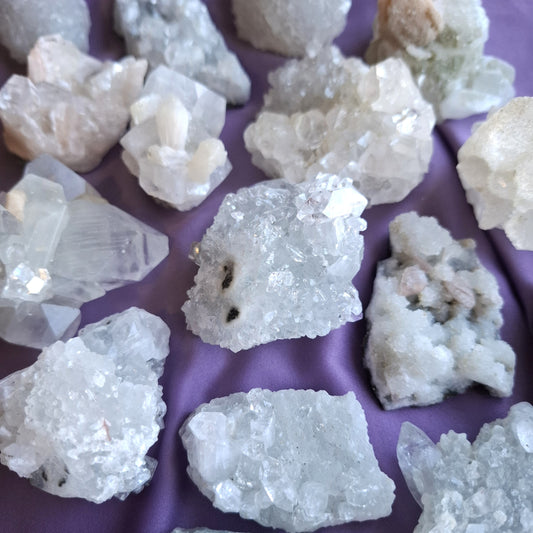
How to choose apophyllite for your home or collection
Apophyllite is known for its bright, glassy appearance and naturally reflective crystal faces. Many specimens are colourless or white, although pale green and other subtle tones can also occur. Its clear surfaces, geometric formations and sparkling points make apophyllite particularly attractive as a mineral specimen and decorative crystal.
Apophyllite is commonly found in clusters, individual crystal points and specimens growing together with other minerals. Because the material is relatively delicate, it is usually best appreciated as a display piece rather than a crystal intended for frequent handling.
When choosing apophyllite, consider the size of the specimen, the condition and shape of its crystal points, the amount of transparency or sparkle you prefer and where you plan to display it.
What does apophyllite look like?
Apophyllite crystals often have sharply defined faces and a glass-like or pearly lustre. Colourless specimens can appear almost transparent in places, while white crystals may look cloudy or softly reflective. Pale green apophyllite is also especially distinctive.
Depending on the specimen, you may see:
- clear, white or pale green crystal points
- bright reflective crystal faces
- geometric or pyramid-like terminations
- clusters of many small crystals
- natural fractures, cleavage surfaces or small cavities
- associated minerals within the same specimen
Natural differences in transparency, crystal size, surface texture and associated minerals are part of the specimen rather than faults. If a product page shows an individual piece, review all photographs because the appearance can change considerably from one side to another.
Raw apophyllite, clusters and polished pieces
Raw apophyllite specimens and clusters show the mineral’s natural crystal structure most clearly. They are well suited to shelves, mineral collections, display cabinets and other protected places where the points can be seen without frequent handling.
Smaller specimens are easier to place beside books, other crystals or personal objects. Larger clusters can become a focal point because light reflects from many crystal faces at once.
Polished apophyllite is less common than raw crystal specimens. If a polished or shaped piece is available, check the product description carefully because different forms may have different edges, inclusions and care requirements.
The traditional meaning of apophyllite
In crystal traditions, apophyllite is associated with clarity, calm, reflection and creating a lighter atmosphere. Some people choose it as a symbolic reminder to slow down, clear mental clutter or make space for a quieter moment.
These associations come from spiritual traditions and personal practices rather than scientifically demonstrated effects. Apophyllite does not medically reduce stress, cleanse the body or change physical energy.
A crystal can still have personal value as an object connected with a chosen routine, intention or moment of reflection.
Apophyllite for quiet routines and mental clarity
Apophyllite is often chosen for places associated with planning, reading, journalling or meditation because its bright appearance fits naturally into calm and uncluttered spaces.
You might use the crystal as a visual reminder to:
- pause before moving on to the next task
- return your attention to one priority
- take a short break from screens
- write down thoughts before making a decision
- create a clearer boundary between work and rest
The practical value comes from the routine you connect with the object rather than from a proven effect of the mineral itself.
Apophyllite at home
Apophyllite works especially well in light, neutral interiors because its transparent and white surfaces reflect surrounding light without adding a strong colour. It also pairs naturally with wood, glass, pale ceramics and darker minerals that create contrast.
Good places for an apophyllite specimen include:
- a protected living-room shelf
- a desk or reading area
- a display cabinet
- a bedside table where it cannot be knocked over
- a mineral collection with other pale or transparent crystals
Choose a stable surface and keep delicate crystal points away from edges. Apophyllite can chip or split if dropped or struck.
Crystals that pair well with apophyllite
Apophyllite can be combined with other minerals either for visual contrast or according to traditional crystal symbolism.
Selenite creates a pale, luminous combination and is traditionally associated with calm and cleansing symbolism.
Clear quartz complements apophyllite with transparent and clouded quartz formations and is traditionally connected with clarity and intention.
Amethyst adds violet colour and is traditionally associated with calm, balance and reflection.
Fluorite can introduce green, purple or blue colour while sharing the crisp geometric appearance that many mineral collectors appreciate.
For a darker contrast, hematite or red jasper can create a more grounded-looking combination.
Is apophyllite suitable for beginners?
Apophyllite can be a beautiful first mineral specimen if you are interested in natural crystal formations and do not mind handling the piece carefully. Its reflective faces and clearly visible structure make it easy to appreciate without needing any particular crystal practice.
For a beginner who wants a stone to carry every day, a more durable polished mineral may be a more practical choice. Apophyllite is better suited to a stable display area where its crystal points can remain protected.
There is no need to choose apophyllite because of its traditional meaning. Its shape, transparency, sparkle and mineral structure are equally valid reasons to add it to a collection.
Apophyllite composition and durability
Apophyllite refers to a group of hydrated potassium-calcium silicate minerals. Specimens often form well-defined crystals with bright surfaces and can occur together with minerals such as stilbite and other zeolites.
Apophyllite is relatively soft, measuring around 4.5–5 on the Mohs hardness scale, and it has very good cleavage. This means an attractive crystal point can still split or chip if it receives a hard impact.
Natural cleavage lines, small fractures and uneven areas can therefore be present even in an undamaged specimen. Handle the crystal by its strongest base or matrix rather than by thin points.
How to care for apophyllite
Apophyllite should be handled more carefully than harder minerals such as quartz. Delicate points and cleavage surfaces can be damaged by drops, pressure and rough cleaning.
For safe general care:
- remove dust with a dry, very soft brush or cloth
- hold the specimen by a solid base or matrix
- avoid pulling or pressing on individual crystal points
- protect the specimen from drops and hard impacts
- avoid harsh household chemicals and abrasive cleaners
- avoid soaking the specimen in water unless the exact material and associated minerals are known to tolerate it
- store it separately from heavier or harder minerals
When uncertain, dry cleaning and minimal handling are the safest general options.
Who might prefer another crystal?
Apophyllite may not be the most practical choice if you want a crystal for a pocket, bag or frequent handling. Its delicate structure makes a more durable polished stone easier for those uses.
If you prefer darker colours and traditional grounding symbolism, explore hematite or red jasper. If you want a pale crystal with a similarly light appearance, selenite or clear quartz may also appeal to you.
Learn more about apophyllite and crystals
Explore the apophyllite collection and find a crystal specimen with the clarity, sparkle and natural formation that appeals to you.