What is opalite?
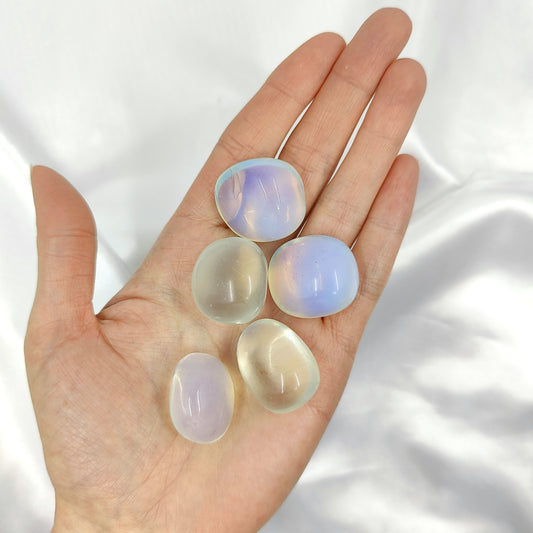
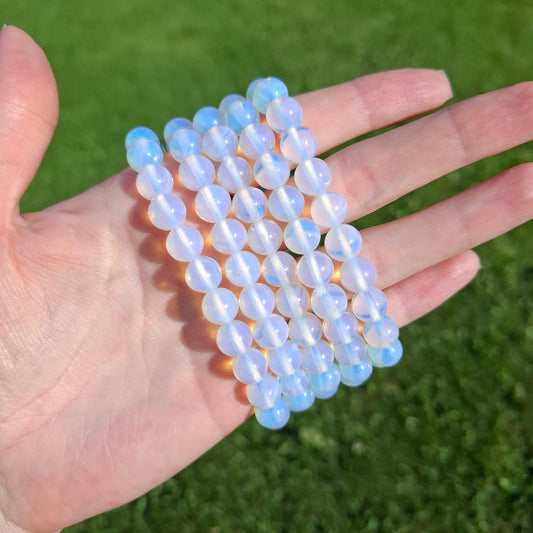
Opalite is a human-made opalescent glass. It usually has a milky or nearly transparent appearance that reflects cool blue tones against a dark background and warmer orange or golden tones when light passes through it.
The name can cause confusion because opalite is often displayed alongside crystals. It is not a naturally formed mineral, a synthetic version of opal or a variety of moonstone.
Its manufactured origin does not make it less attractive as jewellery or a decorative piece. Clear material information simply allows you to know exactly what you are choosing.
Why does opalite change colour?
Opalite’s appearance depends on lighting, background and viewing angle. Against a pale background, it may look milky white or almost transparent. Against a darker surface, its blue glow often becomes more visible.
When illuminated from behind, opalite may reveal warmer yellow, peach or orange tones. This changing appearance is created by the way light interacts with the glass.
Individual pieces can vary in:
- the strength of the blue glow
- the warmth of the transmitted colour
- transparency and cloudiness
- the shape and quality of the polish
- small bubbles or other features within the glass
- how the material looks in different lighting
Opalite, opal and moonstone are different materials
Opalite should not be confused with opal or moonstone.
Opalite is manufactured glass with an opalescent appearance. Its colour and glow are produced during the glassmaking process.
Opal is a naturally formed hydrated silica material. Depending on the variety, it may display a play of colour or have a more even appearance.
Moonstone is a feldspar mineral known for adularescence—a glow that appears to move beneath the stone’s surface.
The materials have different structures, origins and care requirements even though their luminous appearances may look similar.
Polished opalite or jewellery?
Polished opalite pieces make the changing colours easy to observe. A smaller piece can be held against different backgrounds, while a larger decorative shape works well on a shelf or desk.
Opalite jewellery moves with the wearer, allowing its blue and orange tones to change throughout the day. Beads, pendants and earrings can look understated in indirect light and much brighter near a window or lamp.
When choosing opalite, consider:
- how strong you want the blue glow to appear
- whether you prefer a transparent or milkier piece
- whether it will be displayed, carried or worn
- the listed dimensions and jewellery materials
- how the product looks against light and dark backgrounds
- whether the photographs show the exact piece
The modern meaning of opalite
Because opalite is a modern manufactured material, it does not have the same long historical traditions as many minerals.
In contemporary crystal practices, opalite is associated with calm, communication, intuition and emotional balance. Its changing glow is sometimes used as a symbol of transition and viewing a situation from a different perspective.
Some people keep opalite nearby during meditation or quiet evening routines. Others choose it simply because they enjoy its luminous appearance.
These meanings are symbolic and based on modern crystal practices. Opalite does not have scientifically established effects on emotions, sleep, stress or health.
Learn more in our guide to the meaning of opalite.
Opalite at home
Opalite works particularly well in places where changing light can reach it. A piece near a lamp or bright window may look different throughout the day.
Popular places include:
- a bedroom shelf
- a desk or dressing table
- a living-room display
- a reading or meditation area
- a collection of luminous materials
Avoid positioning transparent spheres or strongly curved polished pieces where they could focus direct sunlight onto flammable materials.
Opalite jewellery
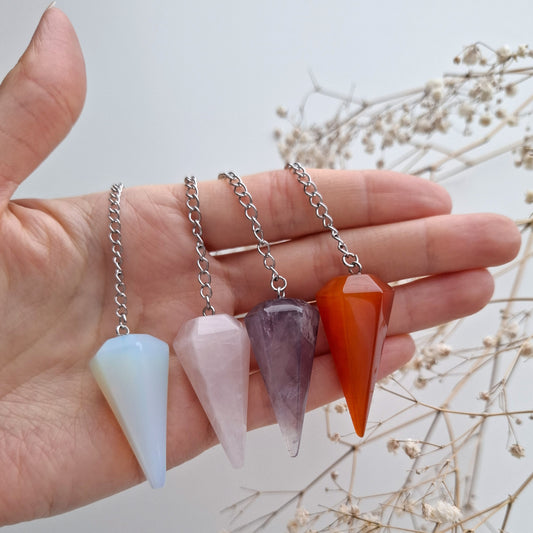
Opalite jewellery suits anyone who enjoys pale colours and an appearance that changes with movement. Its neutral base colour works with many outfits, while its blue and orange glow adds a distinctive detail.
Before ordering, check:
- bracelet or necklace measurements
- bead or pendant dimensions
- fastening and stringing details
- the listed metal components
- whether the piece is sold individually or as a pair
- product-specific care instructions
Because opalite is glass, it can chip or break if dropped onto a hard surface.
Materials that pair well with opalite
Opalite combines beautifully with pale and reflective crystals.
Moonstone offers a naturally formed feldspar alternative with a floating glow.
Amethyst adds violet colour and is traditionally associated with calm and clarity.
Aquamarine introduces fresh blue tones and symbolism connected with calm communication.
Angelite complements opalite with an opaque pale blue appearance, while aura quartz provides a brighter metallic rainbow finish.
You can also explore ready-made combinations in the crystal sets.
Is opalite suitable for beginners?
Opalite is easy to enjoy and care for, making it an accessible choice for someone interested in luminous jewellery or polished decorative pieces.
The important point is knowing that it is manufactured glass rather than a naturally formed crystal. Choose opalite because you appreciate its appearance, colour and symbolism—not because it has been presented as opal or moonstone.
For naturally formed options, explore our crystals for beginners.
Caring for opalite
Opalite should be cared for like decorative glass. It can scratch, chip or break when dropped or struck against a hard surface.
For safe care:
- wipe it with a clean, soft cloth
- use lukewarm water and mild soap when necessary
- avoid abrasive cleaners and rough brushes
- remove jewellery before showering, swimming and exercising
- protect pieces from drops and sudden temperature changes
- keep them away from perfume and cleaning products
- store jewellery separately to reduce scratches
- avoid steam and ultrasonic cleaning
Learn more about opalite
Explore the opalite collection and find a polished piece or item of jewellery with a glow that appeals to you.
Back to all categories