Was ist Opalit?
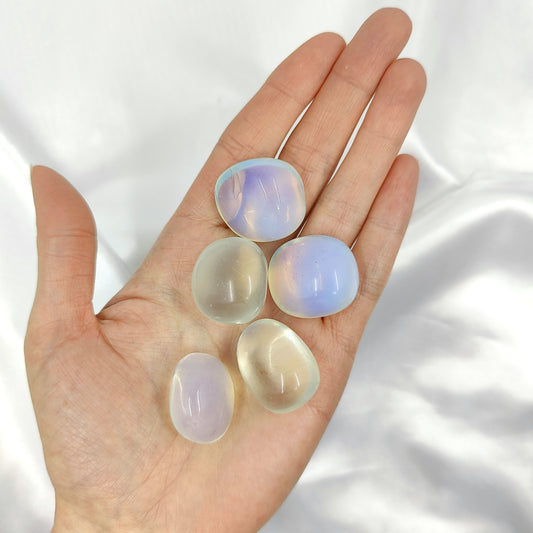
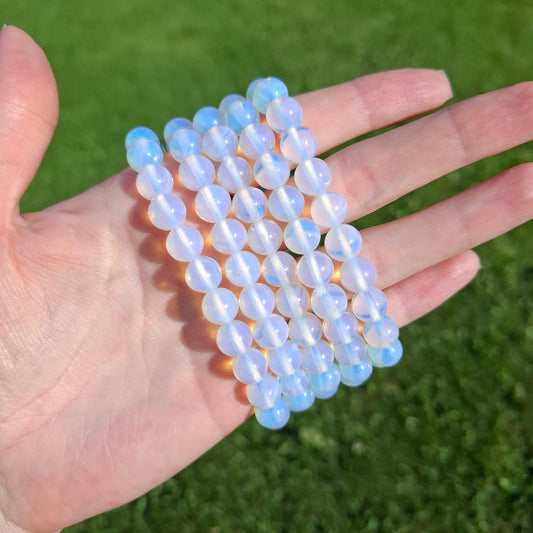
Opalit ist ein künstlich hergestelltes opalisierendes Glas. Es wirkt meist milchig oder nahezu transparent und reflektiert vor dunklem Hintergrund kühle Blautöne, während bei durchscheinendem Licht wärmere orangefarbene oder goldene Nuancen sichtbar werden können.
Der Name kann verwirrend sein, da Opalit häufig zusammen mit Kristallen angeboten wird. Es handelt sich jedoch weder um ein natürlich entstandenes Mineral noch um eine synthetische Form von Opal oder eine Varietät von Mondstein.
Sein künstlicher Ursprung macht Opalit als Schmuck oder dekoratives Objekt nicht weniger attraktiv. Klare Materialangaben ermöglichen Dir einfach, genau zu wissen, was Du auswählst.
Warum verändert Opalit seine Farbe?
Das Erscheinungsbild von Opalit hängt von Beleuchtung, Hintergrund und Blickwinkel ab. Vor einem hellen Hintergrund kann er milchig weiß oder beinahe transparent wirken. Vor einer dunkleren Fläche wird sein bläulicher Schimmer häufig deutlicher sichtbar.
Wird Opalit von hinten beleuchtet, können wärmere Gelb-, Pfirsich- oder Orangetöne sichtbar werden. Dieser wechselnde Eindruck entsteht durch die Art, wie Licht mit dem Glas wechselwirkt.
Einzelne Stücke können sich unterscheiden in:
- der Stärke des blauen Schimmers
- der Wärme der bei durchscheinendem Licht sichtbaren Farbe
- Transparenz und milchiger Trübung
- Form und Qualität der Politur
- kleinen Bläschen oder anderen Merkmalen im Glas
- dem Erscheinungsbild bei unterschiedlichen Lichtverhältnissen
Opalit, Opal und Mondstein sind unterschiedliche Materialien
Opalit sollte nicht mit Opal oder Mondstein verwechselt werden.
Opalit ist hergestelltes Glas mit opalisierendem Erscheinungsbild. Farbe und Schimmer entstehen während der Glasherstellung.
Opal ist ein natürlich entstandenes wasserhaltiges Siliziumdioxid-Material. Je nach Varietät kann er ein Farbspiel zeigen oder ein gleichmäßigeres Erscheinungsbild besitzen.
Mondstein ist ein Feldspatmineral, das für seine Adulareszenz bekannt ist — einen Schimmer, der sich scheinbar unter der Steinoberfläche bewegt.
Diese Materialien unterscheiden sich in Struktur, Ursprung und Pflegeanforderungen, auch wenn ihre leuchtenden Effekte ähnlich wirken können.
Polierter Opalit oder Schmuck?
Bei polierten Opalitstücken lassen sich die wechselnden Farben besonders gut beobachten. Ein kleineres Stück kannst Du vor unterschiedliche Hintergründe halten, während eine größere dekorative Form gut auf ein Regal oder einen Schreibtisch passt.
Opalit-Schmuck verändert sein Erscheinungsbild mit der Bewegung und kann dadurch im Laufe des Tages unterschiedliche Blau- und Orangetöne zeigen. Perlen, Anhänger und Ohrringe können bei indirektem Licht zurückhaltend wirken und in Fensternähe oder unter einer Lampe deutlich heller erscheinen.
Achte bei der Auswahl von Opalit darauf:
- wie deutlich der blaue Schimmer sein soll
- ob Du ein transparenteres oder milchigeres Stück bevorzugst
- ob Du es aufstellen, bei Dir tragen oder als Schmuck tragen möchtest
- die angegebenen Maße und Schmuckmaterialien
- wie das Produkt vor hellem und dunklem Hintergrund aussieht
- ob die Fotos genau das angebotene Einzelstück zeigen
Die moderne Bedeutung von Opalit
Da Opalit ein modernes künstlich hergestelltes Material ist, besitzt er nicht dieselben langen historischen Traditionen wie viele Mineralien.
In heutigen Kristallpraktiken wird Opalit mit Ruhe, Kommunikation, Intuition und emotionaler Balance verbunden. Sein wechselnder Schimmer wird manchmal als Symbol für Übergänge und dafür verwendet, eine Situation aus einer anderen Perspektive zu betrachten.
Manche Menschen bewahren Opalit während Meditation oder ruhiger Abendroutinen in ihrer Nähe auf. Andere wählen ihn einfach, weil ihnen sein leuchtendes Erscheinungsbild gefällt.
Diese Bedeutungen sind symbolisch und beruhen auf modernen Kristallpraktiken. Für Wirkungen von Opalit auf Emotionen, Schlaf, Stress oder Gesundheit gibt es keine wissenschaftlichen Nachweise.
Mehr erfährst Du in unserem Ratgeber über die Bedeutung von Opalit.
Opalit zu Hause
Opalit kommt besonders gut an Orten zur Geltung, an denen wechselndes Licht auf ihn trifft. Ein Stück in der Nähe einer Lampe oder eines hellen Fensters kann im Verlauf des Tages immer wieder anders wirken.
Geeignete Plätze sind zum Beispiel:
- ein Regal im Schlafzimmer
- ein Schreibtisch oder Schminktisch
- ein Arrangement im Wohnzimmer
- ein Lese- oder Meditationsbereich
- eine Sammlung leuchtender Materialien
Positioniere transparente Kugeln oder stark gewölbte polierte Formen nicht so, dass sie direktes Sonnenlicht auf brennbare Materialien bündeln könnten.
Opalit-Schmuck
Opalit-Schmuck passt zu Menschen, die helle Farben und ein mit der Bewegung wechselndes Erscheinungsbild mögen. Die neutrale Grundfarbe lässt sich mit vielen Outfits kombinieren, während der blaue und orangefarbene Schimmer einen besonderen Akzent setzt.
Prüfe vor der Bestellung:
- die Maße von Armband oder Halskette
- die Größe von Perlen oder Anhänger
- Details zu Verschluss und Fädelmaterial
- die angegebenen Metallkomponenten
- ob das Stück einzeln oder als Paar verkauft wird
- produktspezifische Pflegehinweise
Da Opalit aus Glas besteht, kann er absplittern oder brechen, wenn er auf eine harte Oberfläche fällt.
Materialien, die gut zu Opalit passen
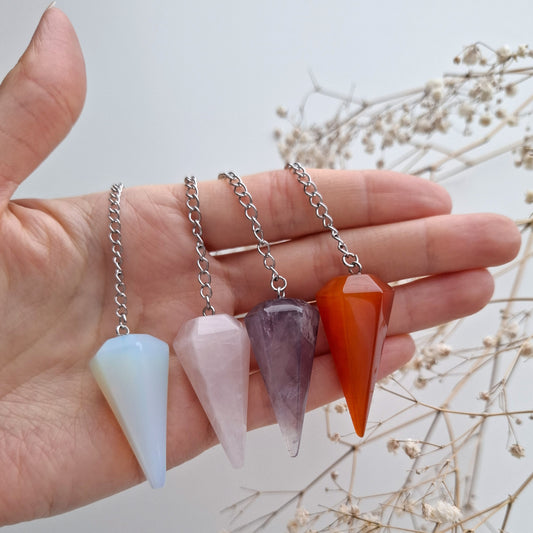
Opalit lässt sich besonders schön mit hellen und reflektierenden Kristallen kombinieren.
Mondstein bietet als natürlich entstandenes Feldspatmineral eine Alternative mit einem schwebend wirkenden Schimmer.
Amethyst bringt Violetttöne ein und wird traditionell mit Ruhe und Klarheit verbunden.
Aquamarin ergänzt frische Blautöne und eine traditionelle Symbolik rund um ruhige Kommunikation.
Angelit ergänzt Opalit mit einem opaken hellblauen Erscheinungsbild, während Aura-Quarz eine deutlich kräftigere metallische Regenbogenoberfläche bietet.
Fertig zusammengestellte Kombinationen findest Du außerdem in unseren Kristallsets.
Ist Opalit für Anfänger geeignet?
Opalit ist unkompliziert zu genießen und zu pflegen und kann deshalb eine gute Wahl für den Einstieg in leuchtenden Schmuck oder polierte Dekoobjekte sein.
Wichtig ist vor allem zu wissen, dass es sich um hergestelltes Glas und nicht um einen natürlich entstandenen Kristall handelt. Wähle Opalit, weil Dir Aussehen, Farbe und Symbolik gefallen — nicht, weil er als Opal oder Mondstein dargestellt wurde.
Wenn Du natürlich entstandene Materialien bevorzugst, entdecke unsere Kristalle für Anfänger.
Opalit richtig pflegen
Opalit sollte wie dekoratives Glas gepflegt werden. Er kann zerkratzen, absplittern oder brechen, wenn er herunterfällt oder gegen eine harte Oberfläche stößt.
Für eine sichere Pflege:
- wische ihn mit einem sauberen, weichen Tuch ab
- verwende bei Bedarf lauwarmes Wasser und milde Seife
- vermeide scheuernde Reiniger und raue Bürsten
- lege Schmuck vor dem Duschen, Schwimmen und Sport ab
- schütze Stücke vor Stürzen und plötzlichen Temperaturwechseln
- halte sie von Parfüm und Reinigungsmitteln fern
- bewahre Schmuck getrennt auf, um Kratzer zu reduzieren
- vermeide Dampf- und Ultraschallreinigung
Mehr über Opalit erfahren
Entdecke die Opalit-Kollektion und finde ein poliertes Stück oder ein Schmuckstück mit einem Schimmer, der Dir besonders gefällt.
Zurück zu allen Kategorien