How to choose a prehnite crystal
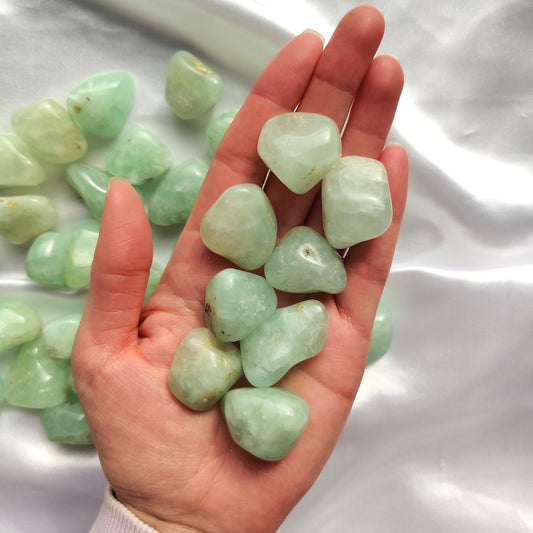
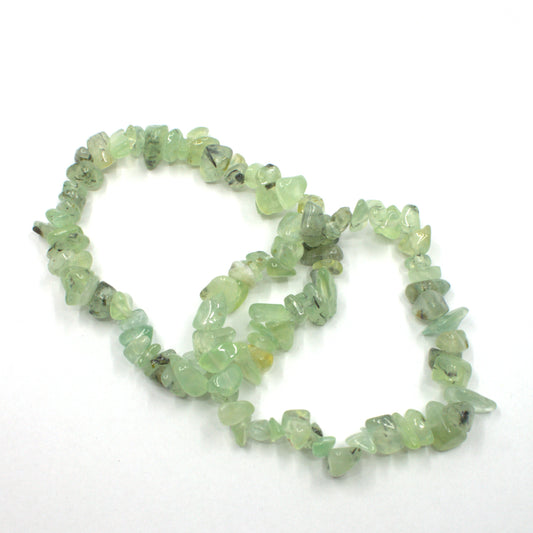
Prehnite usually appears in pale green, yellow-green or cream tones. Some pieces are almost transparent around the edges, while others have a softer, cloudier appearance. Dark epidote inclusions may create needles, patches or branching patterns inside the stone.
When choosing prehnite, compare several pieces in natural light. Colour, translucency and inclusions can look noticeably different as the stone is turned.
What gives prehnite its colour and appearance?
Prehnite is a calcium aluminium silicate mineral. Small amounts of iron contribute to its characteristic green and yellow-green shades.
The mineral often forms rounded, grape-like aggregates known as botryoidal formations. These shapes can be especially visible in raw specimens, while polishing highlights the stone’s colour, depth and internal patterns.
Some prehnite contains dark green or black epidote inclusions. These are natural mineral formations rather than flaws, and many collectors specifically look for pieces with clearly visible needles or contrasting patterns.
Prehnite, peridot or chrysoprase?
Prehnite can occasionally resemble other green stones, particularly peridot, chrysoprase and serpentine.
Peridot usually has a brighter yellow-green colour and greater transparency. Chrysoprase tends to display a stronger, more even apple-green shade, while serpentine is often more opaque and may have a waxier appearance.
Prehnite is commonly identified by its softer green colour, cloudy translucency and occasional epidote inclusions.
Raw, polished or worn as jewellery?
Raw prehnite shows the mineral’s original surface and may display rounded botryoidal formations. It works well in mineral collections, on a shelf or as part of a display featuring other green crystals.
Polished prehnite has a smooth surface that makes its colour and internal inclusions easier to examine. Small polished stones are convenient to carry, while larger freeforms make attractive decorative pieces.
Prehnite jewellery introduces a subtle green shade to everyday outfits. Pendants, bracelets and earrings may also allow translucent areas and inclusions to catch the light as the jewellery moves.
When choosing your prehnite, consider:
- whether you prefer pale or stronger green tones
- how translucent you want the stone to be
- whether you like visible epidote inclusions
- whether you want a raw or polished surface
- whether you intend to display, carry or wear it
The traditional meaning of prehnite
In crystal traditions, prehnite is associated with intuition, reflection, emotional balance and a clearer sense of direction. It is often chosen as a personal reminder to pause, consider what matters and make decisions without unnecessary haste.
Some people keep prehnite nearby while planning a new stage of life or reflecting on their priorities. Others choose it simply for its gentle colour, rounded formations or distinctive inclusions.
These meanings come from crystal traditions and personal practices. Learn more in our guide to the meaning of prehnite.
Prehnite for reflection and planning
Prehnite is often placed in spaces used for journalling, planning, meditation or quiet reading. Its pale green colour creates a soft visual detail without overwhelming the surrounding space.
A small polished stone can be kept beside a notebook or planner. A larger piece can form part of a display connected with personal goals, reflection or a new beginning.
Prehnite at home
Prehnite works well in rooms decorated with green, cream, grey and other natural shades. Its gentle colour suits both minimal interiors and larger crystal displays.
Popular places for prehnite include:
- a bedside table
- a reading area
- a desk or planning space
- a living-room shelf
- a display of green minerals
Place translucent pieces where they can receive indirect natural light, making their colour and internal patterns easier to see.
Prehnite as a gift
Prehnite can be a thoughtful gift for someone beginning a new chapter, making an important decision or simply enjoying pale green minerals.
A polished stone is an approachable choice for a new collector, while jewellery offers an easy way to wear the crystal. A specimen with visible epidote inclusions may appeal especially to someone interested in unusual mineral patterns.
Crystals that pair well with prehnite
Prehnite combines beautifully with crystals traditionally associated with reflection, intuition and a calm atmosphere.
Amethyst introduces purple tones and is traditionally associated with tranquillity and thoughtful routines. Moonstone continues the theme of intuition with a pale, luminous appearance.
Labradorite adds darker colour and reflective flashes, while selenite creates a light, neutral combination. Clear quartz pairs easily with prehnite without distracting from its green colour or natural inclusions.
For several complementary crystals selected around a shared theme, explore the crystal sets.
Is prehnite suitable for beginners?
Prehnite is an approachable crystal for beginners who enjoy pale green colours, translucent stones or naturally occurring inclusions.
A small polished stone is easy to carry or display, jewellery fits naturally into everyday use, and a raw specimen offers an interesting introduction to botryoidal mineral formations.
You do not need a particular routine to enjoy prehnite. Its colour, shape, inclusions and intended use are all practical reasons to choose an individual piece.
Read our crystals for beginners guide for more help with selecting your first stones.
Prehnite durability and care
Prehnite measures approximately 6–6.5 on the Mohs hardness scale. It is suitable for polished stones and jewellery, but it can be brittle and should be protected from hard impacts.
Clean prehnite gently with lukewarm water, mild soap and a soft cloth. Avoid abrasive cleaners, steam, ultrasonic cleaning, high heat and sudden temperature changes.
Store prehnite jewellery separately from harder minerals such as quartz to reduce the risk of scratches. Prehnite should not be placed in drinking water.
Learn more about prehnite
Explore the prehnite collection and find a raw specimen, polished stone or item of jewellery with a colour and pattern that appeal to you.