How to choose a blue apatite crystal
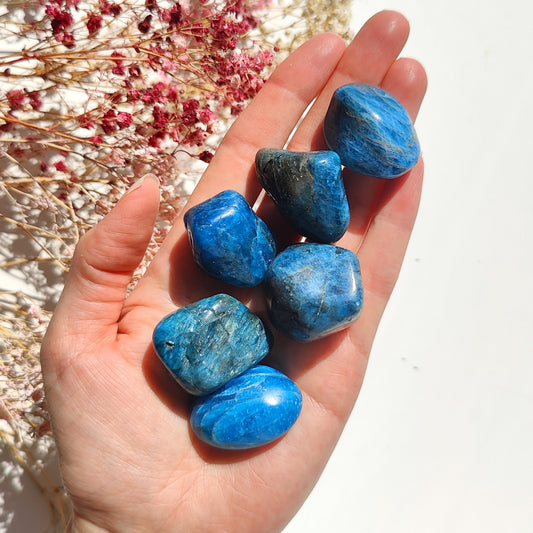
Blue apatite can range from light blue-green to vivid turquoise and deep ocean blue. Some pieces display a relatively even colour, while others contain lighter areas, darker markings or visible internal fractures.
When choosing blue apatite, view the piece under neutral lighting. Strong artificial light can make turquoise tones appear brighter, while indirect daylight reveals the overall colour and translucency more accurately.
What is blue apatite?
Apatite is a group of calcium phosphate minerals. It occurs in several colours, including green, yellow, violet, pink, colourless and blue.
The mineral commonly forms hexagonal crystals but may also occur as massive or granular material. Transparent specimens can be faceted, while translucent and opaque material is often polished into beads, cabochons and decorative stones.
Apatite gives its name to level 5 on the Mohs hardness scale. It is therefore less resistant to scratches than quartz, which measures 7.
What gives blue apatite its appearance?
Blue apatite may be transparent, translucent or opaque depending on its formation and internal structure. Colour can range from greenish blue to an intense blue that resembles tropical water.
Natural inclusions, cloudy sections and internal fractures may create differences in colour within an individual piece. Polishing usually makes these features easier to see.
Some vivid blue apatite used in jewellery may have been heat treated to improve or alter its colour. If treatment status is important to you, check the individual product information before purchasing.
Blue apatite, aquamarine or sodalite?
Blue apatite can resemble several other blue minerals, but their typical appearances differ.
Aquamarine is often clearer and lighter, with blue-green colour inside well-defined crystals. Blue apatite can display stronger turquoise or ocean-blue shades and may contain more visible internal fractures.
Sodalite is usually opaque and deep blue with white calcite markings. It does not normally have the translucent, glass-like appearance found in some blue apatite.
Amazonite tends to have a more opaque blue-green colour with pale streaks or patches.
Raw, polished or worn as jewellery?
Raw blue apatite reveals the mineral’s original surface and structure. It works well in a mineral collection or as a colourful addition to a desk or shelf.
A polished stone emphasises the colour and makes natural markings easier to examine. Smaller pieces can be displayed beside a notebook or carried separately in a protective pouch.
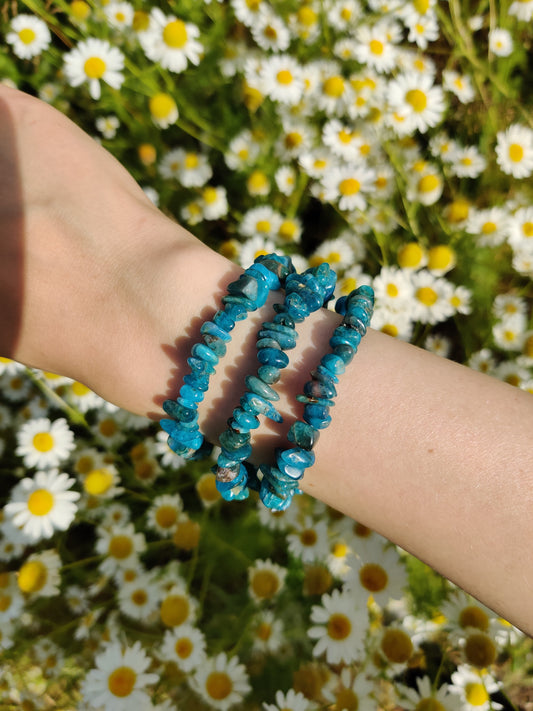
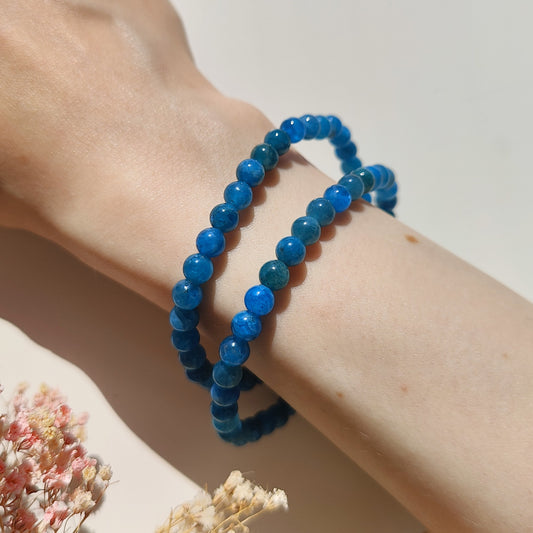
Blue apatite jewellery provides a vivid point of colour. Pendants and earrings are generally less exposed to impacts than rings or bracelets, although every piece should still be worn carefully.
When choosing your blue apatite, consider:
- whether you prefer turquoise, ocean-blue or blue-green colour
- how translucent you want the piece to appear
- whether you enjoy visible inclusions and natural markings
- whether you want a raw or polished surface
- whether you intend to display, carry or wear it
- which individual colour and pattern appeal to you most
The traditional meaning of blue apatite
In crystal traditions, blue apatite is associated with motivation, inspiration, communication and focused intentions. It is often selected as a symbolic reminder to express ideas, remain curious and take practical steps towards a goal.
Some people keep blue apatite nearby while studying, planning or beginning a creative project. Others choose it simply because its vivid blue colour creates an energetic focal point.
These meanings come from crystal traditions and personal practices rather than scientifically demonstrated effects. Learn more in our guide to the meaning of blue apatite.
Blue apatite for study and focused work
Blue apatite is often placed in areas used for studying, writing or planning. A small polished stone takes up little room beside a notebook, computer or collection of pens.
The crystal does not improve concentration through a scientifically proven effect. It can instead function as a visual reminder to define the task, remove distractions and complete one stage before moving to the next.
Explore more crystals for study and concentration.
Blue apatite for creative projects
In crystal traditions, blue apatite is also associated with inspiration and self-expression. Its vivid colour makes it a popular addition to studios, writing desks and other spaces used for creative work.
A piece can be placed beside a sketchbook or current project as a reminder to record ideas before evaluating them. The practical benefit comes from creating a routine that gives ideas time and attention.
Explore more crystals for creativity and inspiration.
Blue apatite at home
Blue apatite adds strong colour to neutral interiors and combines well with white, grey, blue-green and metallic details.
Popular places for blue apatite include:
- a desk or study area
- a creative workspace
- a living-room shelf
- a display of blue minerals
- a cabinet containing polished stones
- a reading or journalling area
Keep polished pieces away from the edges of shelves and protect raw crystals from knocks.
Blue apatite as a gift
Blue apatite can make an eye-catching gift for someone who enjoys vivid colours, creative work or unusual minerals.
Its traditional associations with motivation and self-expression may suit a graduation, new project or professional milestone. Jewellery is a practical option for someone who wears blue regularly, while a polished stone or raw specimen suits a crystal collection.
Crystals that pair well with blue apatite
Blue apatite combines well with crystals traditionally associated with focus, communication and creative activity.
Fluorite introduces green and purple colour and is traditionally connected with organisation and concentration. Sodalite adds a deeper blue traditionally associated with structured thinking and communication.
Citrine creates a contrasting blue-and-yellow arrangement and is symbolically connected with motivation and optimism. Carnelian adds orange-red colour and traditional associations with action and confident expression.
Amazonite continues the blue-green palette, while clear quartz provides a neutral, transparent contrast.
For several complementary stones chosen around a shared purpose, explore the crystal sets.
Is blue apatite suitable for beginners?
Blue apatite can be an appealing first crystal for someone drawn to vivid blue colour, polished stones or mineral jewellery.
A small polished piece is easy to display, while a pendant or pair of earrings can introduce the colour into everyday outfits. The mineral’s limited durability should be understood before choosing frequently worn jewellery.
Apatite is brittle and less resistant to scratches than quartz. It should therefore be stored separately and protected from hard surfaces.
Read our crystals for beginners guide for more practical help with selecting your first stones.
Blue apatite durability and care
Apatite measures 5 on the Mohs hardness scale. It can be scratched by quartz, many common gemstones and some metal objects. It is also brittle and may chip or fracture if dropped.
Clean blue apatite briefly with lukewarm water, mild soap and a clean cloth. Rinse carefully and dry the piece immediately.
Avoid:
- steam and ultrasonic cleaning
- harsh chemicals and abrasive products
- hard impacts and pressure
- sudden temperature changes
- prolonged soaking in water
- storing apatite beside harder stones
- wearing delicate jewellery during exercise or manual work
Store blue apatite jewellery in its own compartment or fabric pouch. Pendants and earrings should be placed where metal components cannot press against the stone.
Learn more about blue apatite
Explore the blue apatite collection and choose a raw piece, polished stone or item of jewellery in a shade of blue that appeals to you.