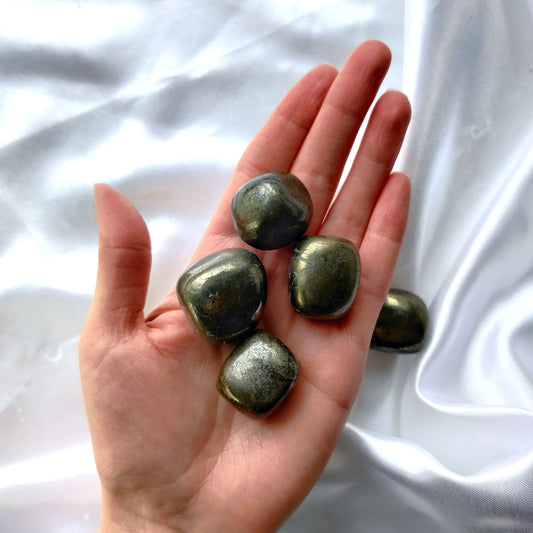
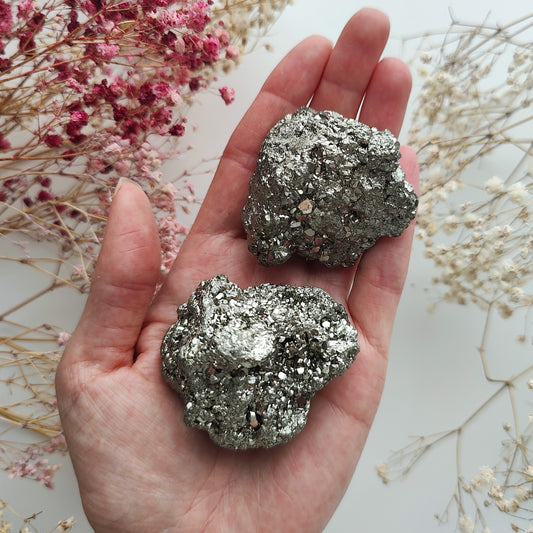
Pyrite crystals with a distinctive metallic finish
Pyrite is an iron sulphide mineral with the chemical formula FeS₂. Its reflective brass-yellow surface and geometric formations have earned it the familiar nickname fool’s gold.
The resemblance is only superficial. Gold is comparatively malleable, while pyrite is brittle and can form sharp-edged cubes, pyritohedrons, clusters and fine crystalline surfaces. These structures make pyrite an interesting mineral even without its traditional symbolism.
What does pyrite traditionally represent?
In modern crystal traditions, pyrite is associated with confidence, ambition, purposeful action and an abundant mindset. Some people keep it near a planner, computer or workspace as a reminder to turn a broad goal into practical next steps.
Pyrite’s traditional meanings commonly include:
- confidence in your abilities
- commitment to a chosen goal
- motivation and purposeful action
- recognising available opportunities
- maintaining practical boundaries
- building progress through consistent work
These meanings are symbolic and are not scientifically demonstrated effects of the mineral. Pyrite cannot create financial success or complete goals on your behalf. It can instead represent the mindset and habits you want to practise.
Why is pyrite called fool’s gold?
Pyrite received its famous nickname because its metallic lustre and pale brass colour can resemble gold. Its name comes from a Greek word connected with fire, referring to the sparks that pyrite can produce when struck against a suitable hard material.
There are several differences between pyrite and gold:
- pyrite often forms cubes and other geometric crystals
- pyrite is brittle rather than malleable
- pyrite has a brass-yellow colour instead of a richer golden tone
- pyrite leaves a dark greenish-black or brownish-black streak
- gold can bend or flatten, while pyrite is more likely to chip or break
Pyrite is valuable as a mineral specimen in its own right and should not be regarded merely as an imitation of gold.
Pyrite on a desk or workspace
A stable shelf or desk is one of the most practical places to display pyrite. Its metallic surface catches the light, while cubic and clustered specimens add texture to a workspace.
You can give the crystal a specific symbolic role by placing it:
- beside a planner used for weekly priorities
- near a notebook containing business or study goals
- on a desk as a reminder to finish one task at a time
- beside a savings plan or project schedule
- on a shelf where its crystal formation can be viewed safely
Keep the specimen away from drinks, humidifiers and frequently handled areas. Pyrite should remain dry to preserve its surface.
Pyrite for collectors
Pyrite is popular among mineral collectors because it forms in several recognisable habits. Some specimens show sharply defined cubes, while others contain intergrown crystals, uneven clusters or fine sparkling surfaces.
When selecting a specimen, compare:
- the shape and definition of the crystals
- cubic, clustered or irregular formations
- bright metallic or darker tarnished surfaces
- the size and weight of the piece
- the presence of surrounding rock or other minerals
- the stability of the specimen when displayed
Small variations, uneven edges and areas of surrounding material are expected in mineral specimens. Review the individual photographs and measurements before choosing your piece.
Pyrite and other goal-focused crystals
Pyrite can be combined symbolically or visually with other crystals traditionally linked with motivation, confidence and purposeful action.
Citrine is associated with optimism and an abundant mindset. Carnelian represents courage and active participation, while tiger’s eye is traditionally connected with focus and considered decision-making.
Malachite is often chosen to represent change, aventurine new opportunities and sunstone confidence and optimism.
You can also browse crystals for success or crystals for confidence.
Who might enjoy pyrite?
Pyrite can be a good choice for someone who appreciates metallic minerals, geometric formations or meaningful objects for a workspace. It also suits collectors who want a recognisable mineral that looks different from colourful quartz and calcite specimens.
Pyrite may appeal to someone looking for:
- a striking mineral for a desk
- a traditional symbol of confidence or ambition
- an introduction to geometric crystal formations
- a small gift for a new job or project
- a metallic contrast within a colourful crystal collection
Because some specimens can have sharp or brittle edges, pyrite should be handled carefully and kept away from small children and pets.
How to choose your pyrite
Choose pyrite according to where you want to display it and which type of formation interests you most.
- choose defined cubes for a geometric appearance
- choose a cluster for a more textured surface
- choose a compact piece for a smaller desk or shelf
- choose a larger specimen as the focus of a mineral display
- check the measurements and weight before ordering
- select a stable shape if the crystal will stand without a holder
The brightest specimen is not automatically the best choice. Crystal shape, texture, surrounding material and overall proportions can be equally important.
How to care for pyrite
Pyrite should be kept dry. Prolonged contact with water and humid conditions can cause its iron sulphide surface to oxidise, leading to tarnishing, crumbling or acidic residues.
To protect your pyrite:
- do not soak or rinse it in water
- remove dust with a clean, dry and very gentle brush
- store it in a dry, well-ventilated place
- keep it away from bathrooms, humidifiers and open windows
- avoid salt, oils, cleaning sprays and household chemicals
- protect brittle crystals from knocks and falls
- do not use pyrite to prepare crystal water or elixirs
If a specimen develops powdery areas, unusual discolouration or a sulphurous smell, separate it from other minerals and move it to a drier storage environment.
Learn more about pyrite
Find your pyrite crystal and choose a distinctive metallic specimen for your workspace or collection.
← Back to all categories


 Sold out